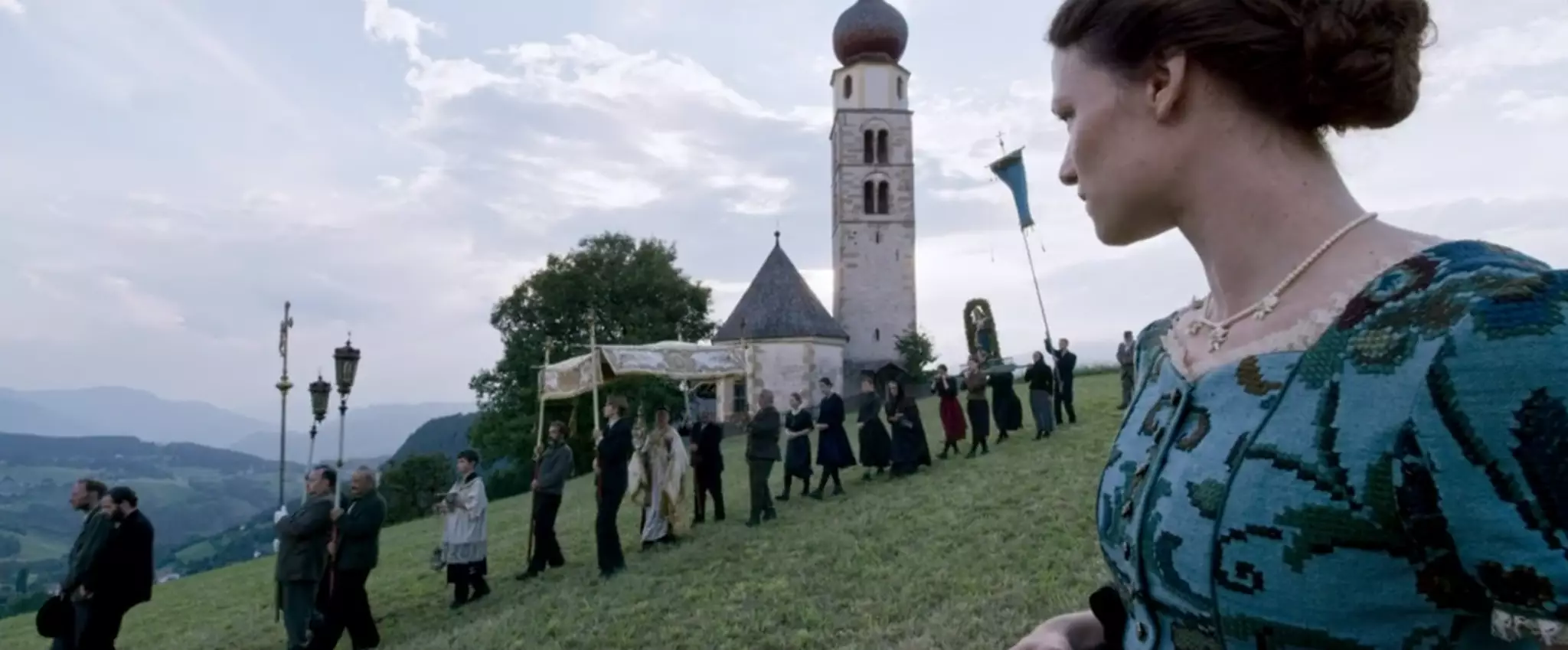
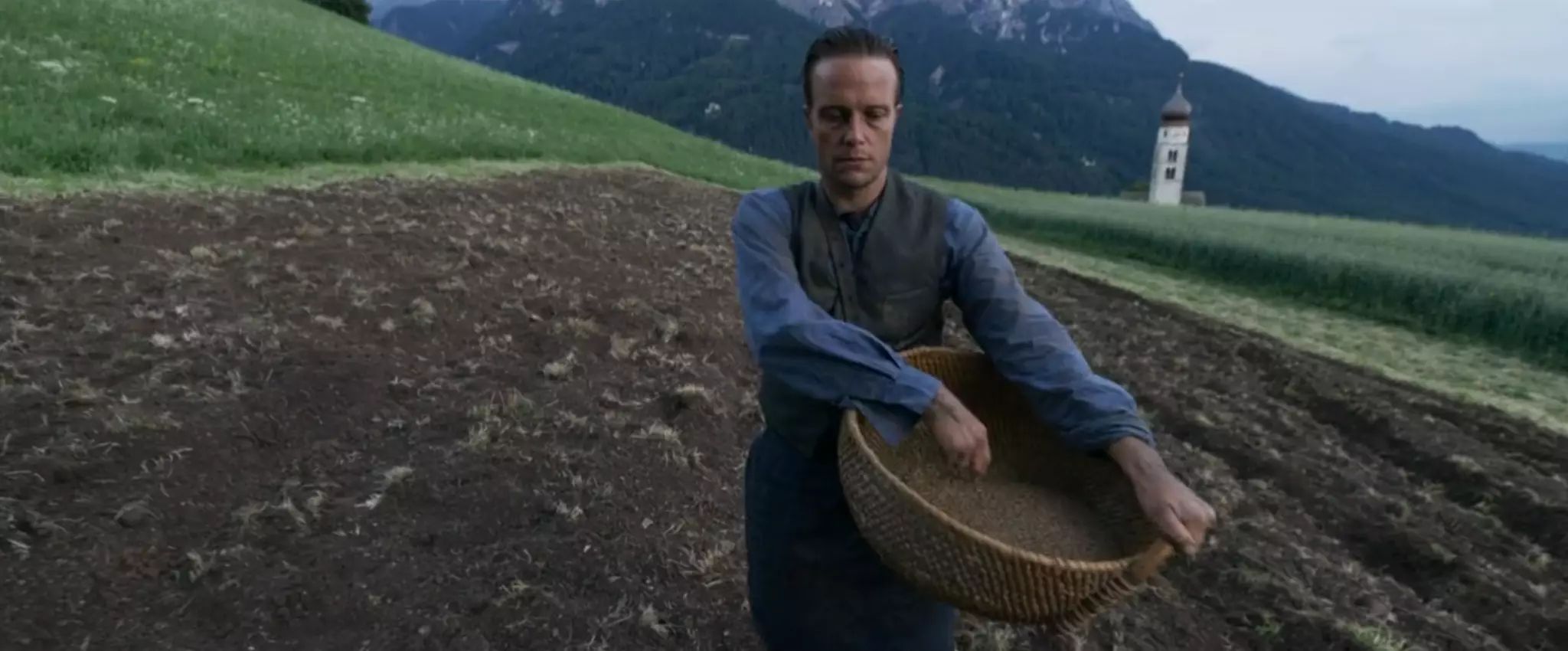
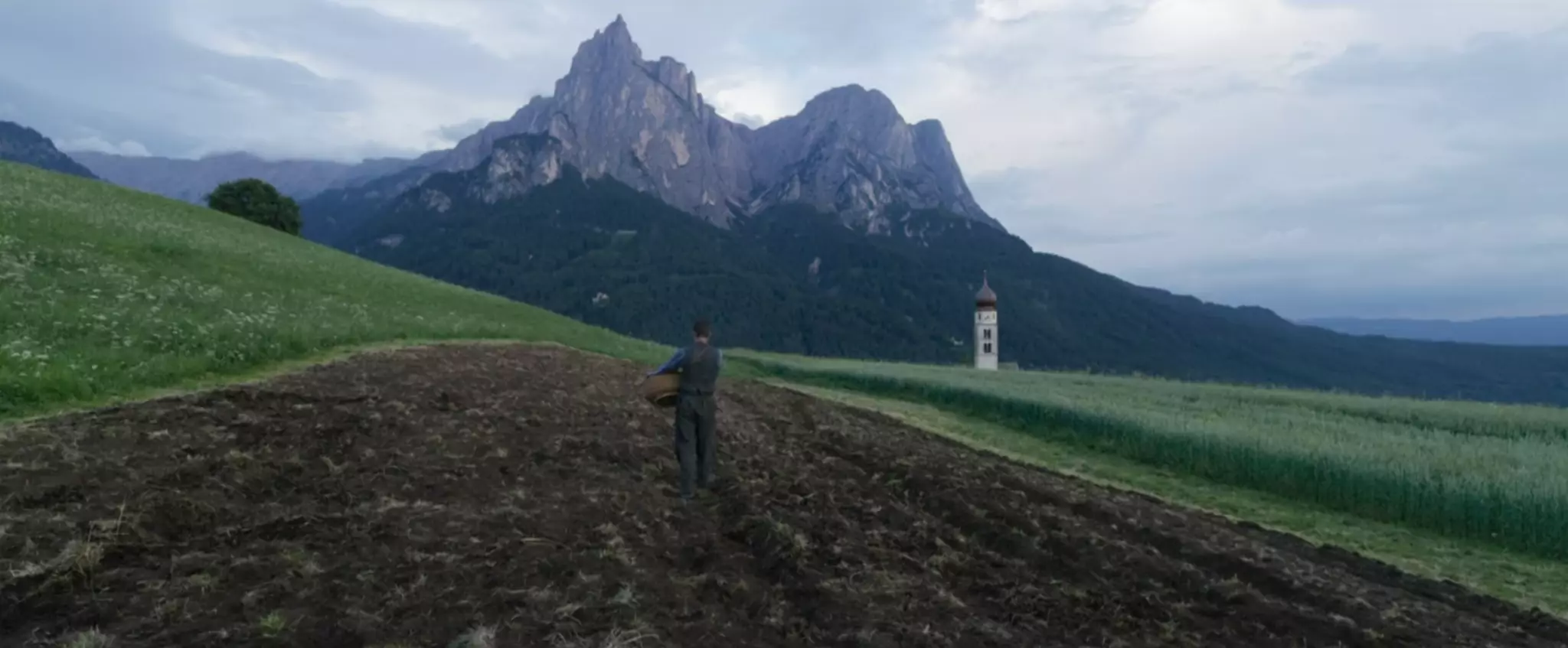
In Terrence Malick’s A Hidden Life (2019), faith is not just a backdrop—it is woven into the soul of the story. The film, based on the true life of Austrian conscientious objector Franz Jägerstätter, explores the tension between moral conviction and worldly authority. Many of the locations chosen for the film reflect this spiritual gravity, and one of the most evocative is St. Valentin Church in Castelrotto (Kastelruth), in the Autonomous Province of Bolzano – South Tyrol, Italy.
Although the narrative centers on Jägerstätter’s stand against conscription in Austria, A Hidden Life was filmed across several rural and ecclesiastical sites in the Alpine region, chosen for their atmospheric resonance with themes of devotion, community, and inner struggle. St. Valentin Church appears on screen as a place of worship, confession, and reflection—symbolising the deep religious roots and cultural reverence that shaped the lives of people like Franz and his wife Fani during the turbulent years of World War II.
The Real Location: St. Valentin Church, Castelrotto
The St. Valentin Church, known locally as Pfarrkirche St. Valentin, is a historic parish church perched in the picturesque village of Castelrotto (Kastelruth), part of the Altopiano dello Sciliar area in South Tyrol, northern Italy. With origins dating back to the Middle Ages, the church embodies centuries of religious tradition and Alpine history. Its architectural style blends Romanesque roots with later Gothic and Baroque elements, giving it a solemn yet welcoming character.
The church’s serene interior and evocative setting makes it a fitting cinematic stand-in for the religious spaces depicted in A Hidden Life, where profound emotional and spiritual moments unfold. Its location in a tranquil mountain village enhances the sense of community and devotion that are central to the film’s themes. Real scenes of worship, confession, and familial closeness are mirrored by the authenticity of this historic church setting.
Why This Location Works
A Hidden Life is not just a war story. It is a meditation on conscience, dignity, and the role of faith in human resistance. Choosing an authentic parish church like St. Valentin anchors the film’s spiritual dimension in a real place where generations have sought solace, meaning, and communal belonging. The calm stone, candlelit interiors, and the weight of history embodied in the church’s walls add emotional texture to the scenes filmed there.
About St. Valentin Church
St. Valentin Church remains an active parish church serving the Castelrotto community. It is notable for:
- Its historic frescoes, nave, and altar details that reflect centuries of artistic and devotional tradition.
- Panoramic views of the Dolomites and alpine meadows that frame the church’s setting.
- A cultural legacy intertwined with village life, festivals, and seasonal celebrations.
Sources: Castelrotto tourism overview; regional heritage listings
Visiting the Location
St. Valentin Church is open to visitors and worshippers alike. Castelrotto (Kastelruth) is a charming Alpine town, ideal for combining film tourism with cultural exploration:
- 🚗 By car: Castelrotto lies about 20 minutes from Bolzano/Bozen.
- 🚆 By train: Nearest major station is at Bolzano, with bus connections to Castelrotto.
- 🏔 Nearby Dolomite trails, village cafés, and cultural heritage sites make this a scenic day trip.
Visitor resource: Castelrotto tourism site with visitor info and opening times