
The Xenomorph Hive in Aliens (1986) represents one of the most terrifying set pieces in science fiction horror, embodying the alien creatures’ rapid colonization of a human colony. Located within the cavernous interior of the Atmosphere Processing Plant at Hadley’s Hope on LV-426, this organic nightmare structure served as the central lair for the Xenomorph Queen and her drone offspring. The hive’s design featured resinous walls dripping with bioluminescent secretions, extensive tunnel networks, and clusters of cocooned human victims awaiting facehugger impregnation. This fictional location amplified the film’s themes of infestation and overwhelming dread, as Ripley and the Colonial Marines navigated its depths in a desperate bid for survival.
The Scene
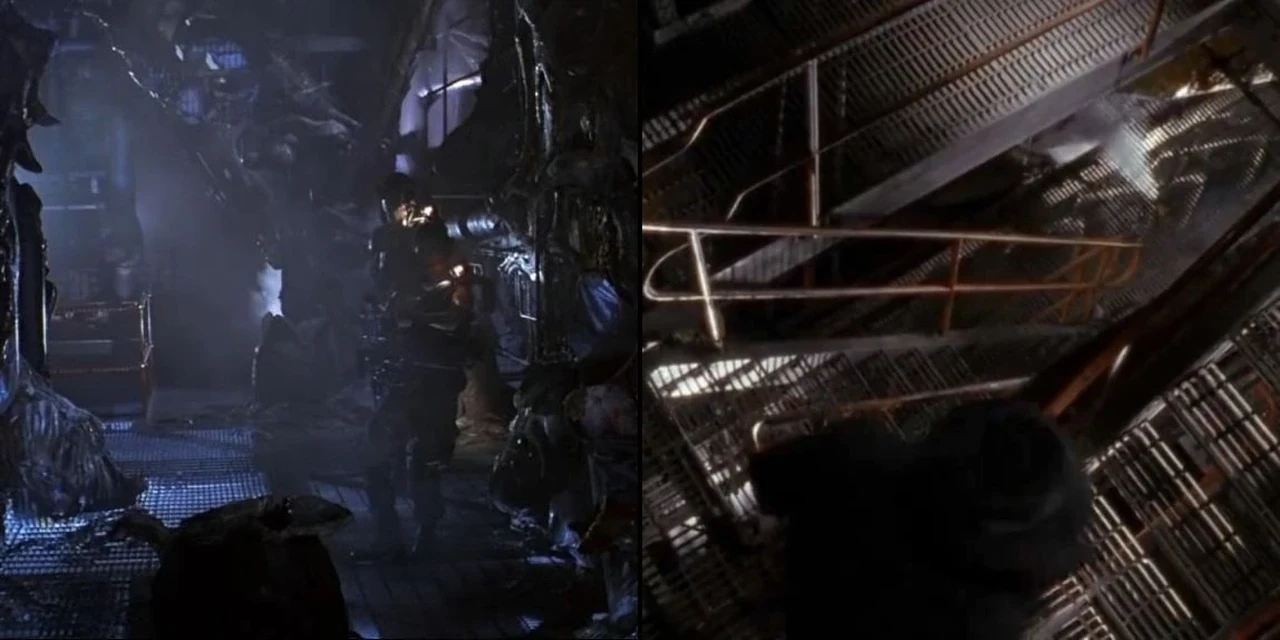
In Aliens, the Xenomorph Hive sequence unfolds as the Marines descend into the sublevels of the Atmosphere Processing Plant, discovering a sprawling network of tunnels coated in slick, pulsating resin. Lieutenant Gorman leads the squad through the eerie corridors, where motion trackers beep frantically amid hanging webs and immobilized colonists encased in cocoons. Tension peaks when the group encounters the massive Xenomorph Queen, perched atop a colossal egg sac, fiercely defending her nest. Hicks and Ripley orchestrate a daring rescue of Newt from a facehugger, using a pulse rifle and flamethrower in close-quarters chaos. The scene culminates in explosive destruction as the hive ignites, forcing a frantic evacuation amid collapsing structures and pursuing drones.
The Real Filming Location
The Xenomorph Hive was filmed at the disused Acton Lane Power Station, a former coal-fired facility in West London near Wembley, south of the Grand Union Canal and west of the Dudding Hill railway line. This industrial site, with its towering metal-grate catwalks spanning multiple levels, doubled as the Atmosphere Processing Plant’s interior. Production cleared hazardous asbestos from the building before shooting, improving air quality beyond that of Pinewood Studios soundstages. The hive set, sculpted in clay then molded from latex and fiberglass, was assembled over six weeks under art director Peter Lamont’s supervision. Remarkably, remnants of the set remained intact years later, visible in 1989’s Batman sequences shot there as Axis Chemicals.
Why This Location Was Chosen
Director James Cameron selected Acton Lane Power Station for its authentically industrial aesthetic, perfectly mimicking the utilitarian design of a futuristic colony’s processing plant. The structure’s elevated catwalks, constructed from see-through metal grates, allowed visibility across the full vertical expanse, ideal for staging dynamic action sequences with Marines moving through multi-level threats. This practical setup enhanced the hive’s claustrophobic yet vast scale, enabling practical effects like dripping resin and pyrotechnics without relying heavily on miniatures. Despite the costly asbestos remediation, the site’s gritty realism and spatial advantages outweighed studio alternatives, contributing to the scene’s immersive tension and groundbreaking visual impact.
Visiting the Location
Acton Lane Power Station no longer exists as a visitor site; it was demolished in the early 2000s to make way for redevelopment near coordinates 51.5233, -0.266 in northwest London. The area has been repurposed into modern housing and commercial spaces, with no public access to original structures. Fans interested in Aliens filming history can explore nearby film-related attractions like the BFI Southbank or Warner Bros. Studio Tour in Leavesden, which occasionally feature franchise exhibits. For virtual visits, archival photos and behind-the-scenes footage are available online through fan wikis and documentaries. Local walks along the Grand Union Canal offer a sense of the site’s former industrial character, though no on-site plaques commemorate the production.
Frames:
Location Address:
 Allan Way, Park Royal, London Borough of Ealing, Greater London, England, W3 0PW, United Kingdom