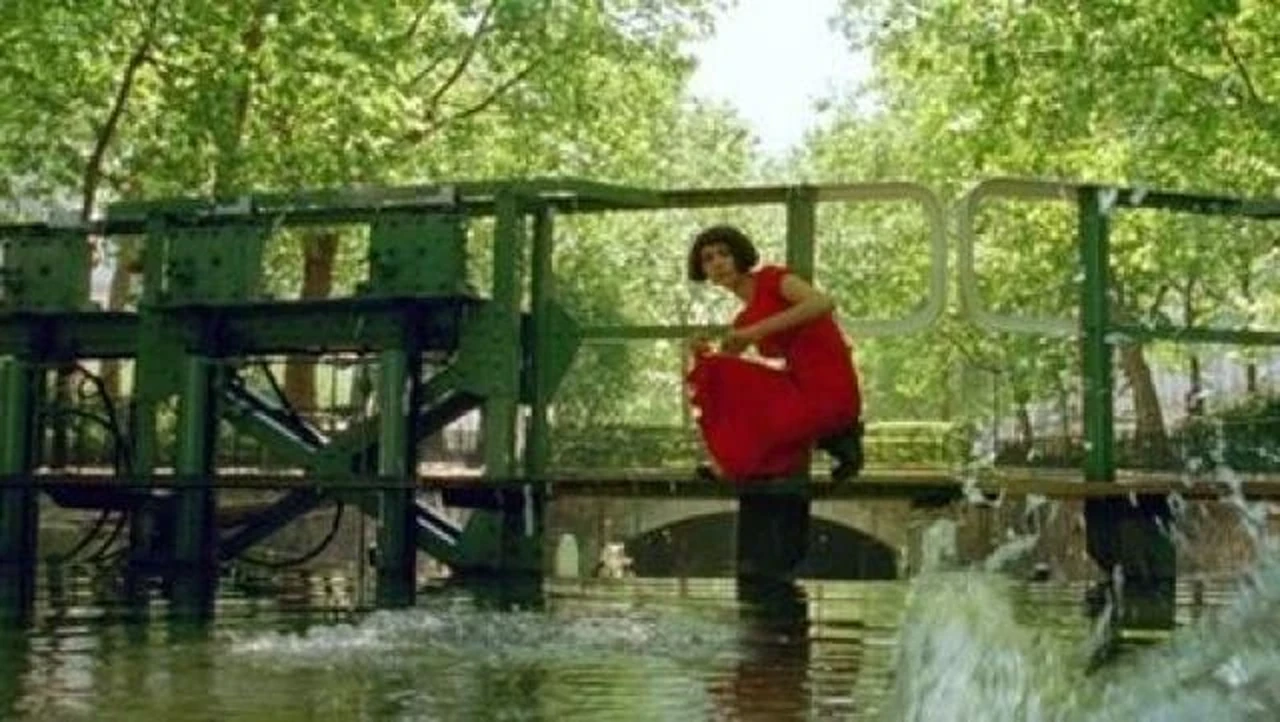
The whimsical French film Amélie prominently features the Canal Saint-Martin as a cherished spot for its shy protagonist, Amélie Poulain. This picturesque waterway in Paris’s 10th arrondissement captures her simple joys amid the city’s bustle. Directed by Jean-Pierre Jeunet, the 2001 movie uses the canal to highlight Amélie’s introspective hobbies, blending everyday charm with magical realism. The location, centered around the Passerelle Bichat bridge, draws fans today for its authentic Parisian vibe and film legacy.
The Scene
In Amélie, the Canal Saint-Martin appears early as one of the title character’s quirky pleasures. Amélie, played by Audrey Tautou, skips stones across the calm waters from a green footbridge, her face lighting up with childlike delight. This serene activity recurs throughout, symbolizing her private happiness amid helping others. The scene sets a tone of gentle escapism, contrasting the film’s vibrant Montmartre settings. Nino Quincampoix, her love interest portrayed by Mathieu Kassovitz, never shares this moment, keeping it as Amélie’s solitary ritual. The canal’s iron bridges and tree-lined banks frame her throws perfectly, evoking nostalgia and whimsy.
The Real Filming Location
Canal Saint-Martin stretches 4.5 kilometers from Bassin de la Villette to Port de l’Arsenal in Paris’s 10th and 11th arrondissements. Inaugurated in 1825, it originally supplied drinking water to the growing city and now stands as a historic monument since 1993. The key filming spot is Passerelle Bichat, a pedestrian iron footbridge over the canal near Folie-Méricourt in the 75011 postal code. Coordinates pinpoint it at approximately 48.870798, 2.364315, along Quai de Valmy. Today, locals picnic, stroll, and relax here, with cafés and boutiques enhancing its bohemian appeal. The canal features locks, swing bridges, and street art, making it a vibrant urban oasis.
Why This Location Was Chosen
Director Jean-Pierre Jeunet selected Canal Saint-Martin to evoke Amélie’s offbeat, hidden joys away from Montmartre’s tourist crowds. Its quieter, authentic Parisian atmosphere contrasted the film’s main neighborhood, adding depth to her character. The canal’s romantic, vintage feel—echoing classic French cinema like Marcel Carné’s Les Enfants du Paradis—aligned with Jeunet’s stylized vision. Practically, the footbridges offered dynamic shots for stone-skipping, while the waterway’s calm surface captured poetic reflections. Though interiors were shot in Germany, exterior Paris spots like this grounded the fantasy in real, lived-in spaces, enhancing the movie’s international appeal.
Visiting the Location
Reaching Canal Saint-Martin is straightforward via Paris Métro: stations like République (lines 3, 5, 8, 9, 11) or Goncourt (line 11) drop visitors steps away. From Montmartre, it’s a 20-minute walk or short ride. Open daily from dawn, it’s free to explore; summer picnics thrive along the quays. Try stone-skipping at Passerelle Bichat, but respect no-litter rules. Nearby, Hôtel du Nord offers film-themed vibes, and boutiques like Marché aux Puces host vintage finds. Avoid peak tourist hours; evenings suit relaxed strolls. Wheelchair access varies at bridges—check paths along Quai de Valmy. Combine with Bastille or Belleville for a full day.