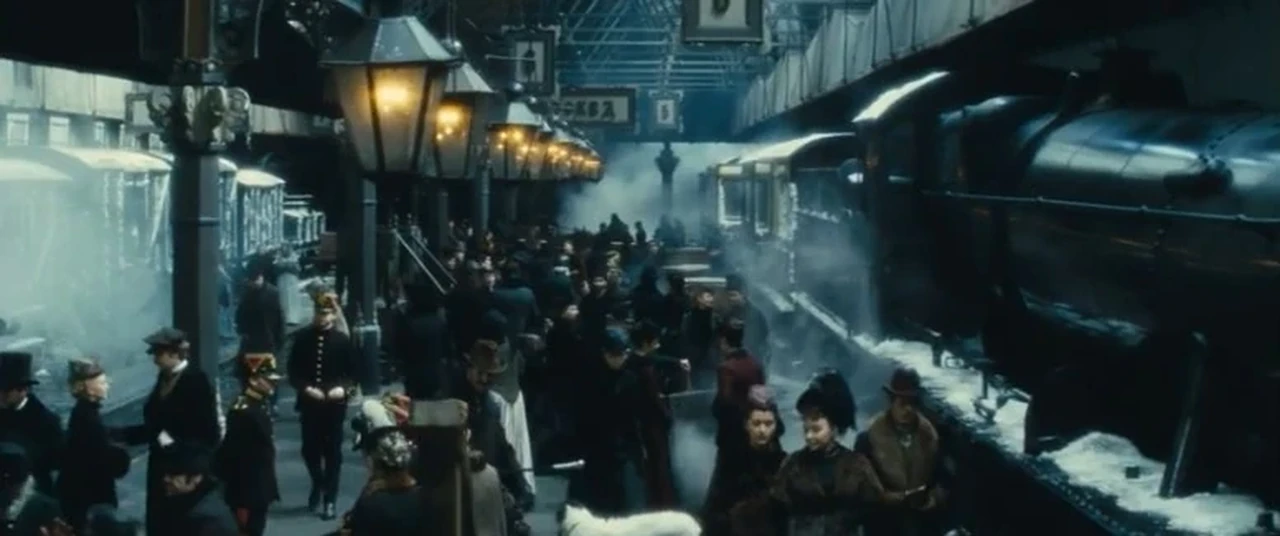

The 2012 film adaptation of Leo Tolstoy’s classic novel Anna Karenina, directed by Joe Wright and starring Keira Knightley and Jude Law, utilized the Didcot Railway Centre in Oxfordshire as a significant filming location. The heritage railway facility, situated near Didcot Parkway station, was transformed to represent a Russian railway station for key scenes in the production. This adaptation stands as one of the most notable film projects to use the Didcot Railway Centre, with the location serving as Moscow station within the narrative of the film. The choice to film at this particular heritage railway site demonstrates how British film productions creatively utilize existing infrastructure to authentically recreate period settings from different countries.
The Scene
The railway station scenes in Anna Karenina are crucial to Tolstoy’s narrative, as trains serve as symbolic elements throughout the novel. In the film adaptation, the Didcot Engine Shed was dressed and filmed to represent Moscow station, providing an authentic period railway setting for key character interactions. The production utilized vintage railway carriages and authentic steam locomotives to create the visual authenticity required for a prestigious literary adaptation. These scenes would have involved the principal characters navigating the station environment, with the period railway infrastructure providing an evocative backdrop that enhances the narrative’s 19th-century Russian setting. The use of real locomotives and authentic railway architecture contributed significantly to the film’s commitment to historical accuracy and visual authenticity.
The Real Filming Location
Didcot Railway Centre is a working heritage railway museum located in Oxfordshire, England, near Didcot Parkway railway station. The facility houses a collection of preserved Great Western Railway locomotives and vintage carriages, making it an ideal location for period film and television productions. The Engine Shed at Didcot Railway Centre served as the primary filming location for the Anna Karenina production. The centre features authentic Victorian-era railway infrastructure, including original GWR locomotives such as No. 5322 and No. 3822, which were utilized during the filming. The preserved railway environment, with its period-appropriate buildings, tracks, and rolling stock, provides filmmakers with ready-made 19th-century railway aesthetics without requiring extensive set construction or digital recreation.
Why This Location Was Chosen
The Didcot Railway Centre was selected because it offers authentic period railway infrastructure that would be extremely costly and complex to construct on a soundstage or purpose-built set. The facility’s collection of preserved Great Western Railway locomotives and vintage carriages provided the visual authenticity necessary for a high-budget adaptation of a classic literary work. Heritage railway centres like Didcot have become increasingly valuable to film and television productions seeking to recreate historical railway environments convincingly. The location’s proximity to London and established relationships with the film industry made it a practical choice for a major production. Additionally, the centre’s existing infrastructure meant minimal set dressing was required compared to building a complete railway station from scratch, allowing production resources to focus on other aspects of the film.
Visiting the Location
The Didcot Railway Centre welcomes visitors and operates as a functioning heritage railway museum open to the public. Visitors can explore the Engine Shed and Transfer Shed where various films and television productions have been shot, including Anna Karenina. The centre features operating steam locomotives that visitors can observe in action, along with vintage carriages and railway artifacts from the Great Western Railway era. The facility offers guided tours and educational programs about railway history and heritage preservation. Visitors interested in film locations can experience the same authentic railway environment that filmmakers chose for major productions. The centre is located near Didcot Parkway station in Oxfordshire, making it accessible by rail from London and other major UK cities. Admission fees and operating hours are available through the Didcot Railway Centre’s official website and visitor information services.
Frames: