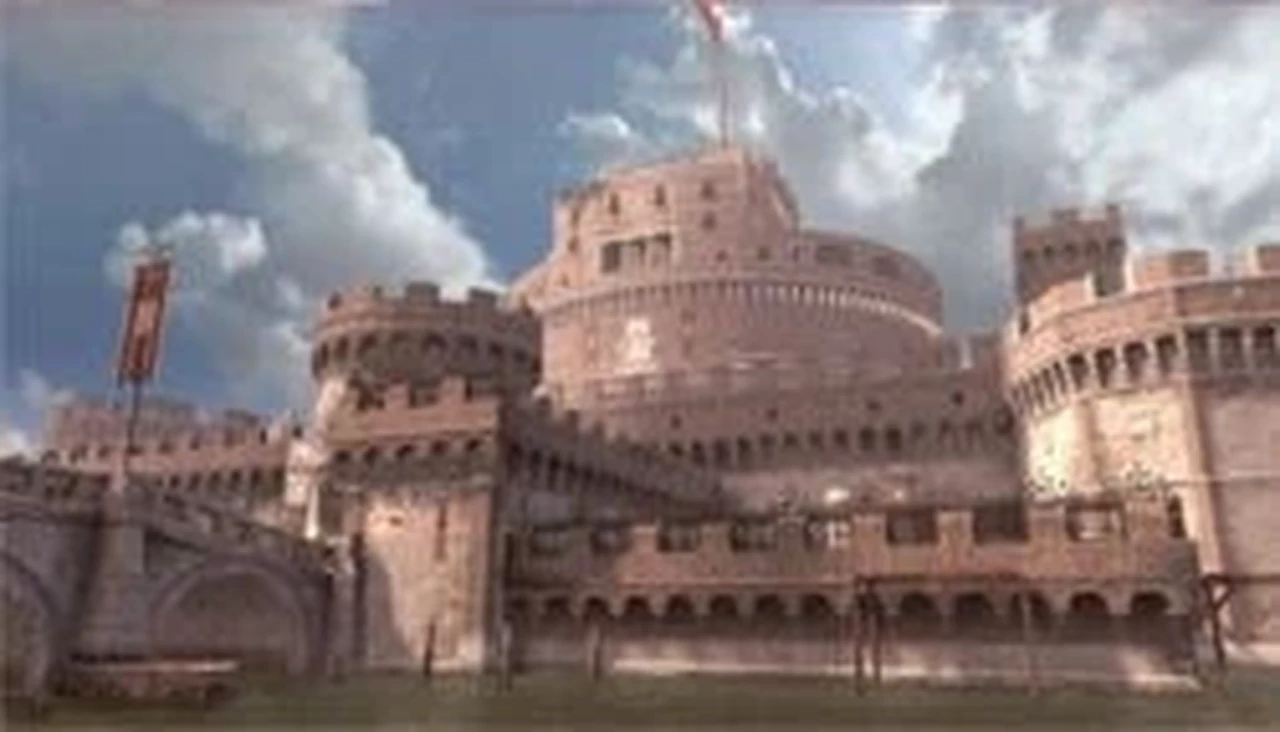
Assassins Creed: Brotherhood – Castel Sant’ Angelo
 Filming Location in Italy

Castel Sant’Angelo serves as a prominent setting in Assassin’s Creed: Brotherhood, the 2010 video game that continues the saga of master assassin Ezio Auditore da Firenze in Renaissance Rome. The fortress, officially known as the Mausoleum of Hadrian, becomes a significant location within the game’s narrative, depicted as the official residence of Pope Alexander VI and his influential children, Cesare and Lucrezia Borgia. This iconic Roman monument transforms into a strategic stronghold within the game’s world, featuring multiple missions and collectible items that players must navigate to progress through the story. The inclusion of Castel Sant’Angelo reflects the game’s commitment to historical accuracy and authentic Italian Renaissance settings, anchoring the player’s experience in real geographical and architectural landmarks.
The Scene
In Assassin’s Creed: Brotherhood, Castel Sant’Angelo functions as a crucial headquarters for the Borgia family, serving as both a residence and a seat of power during the early 16th century. Players encounter multiple missions centered around this location, including the notable “Castello Crasher” mission available during Memory Sequence 4, where players can discover a cluster collectible on the south wall of the main inner structure. The game presents the fortress as a fortified stronghold that Ezio must infiltrate and navigate, with specific objectives tied to dismantling Borgia control in Rome. The architectural layout, with its distinctive cylindrical tower and corner fortifications, provides a recognizable and strategically interesting environment for gameplay. Ezio’s interactions within these walls demonstrate the game’s integration of historical figures and locations into its fictional narrative framework.
The Real Filming Location
Castel Sant’Angelo stands on the right bank of the Tiber River in Rome, Italy, connected to the city by Ponte Sant’Angelo (formerly Ponte Elio) and linked to the Apostolic Palace through the Passetto di Borgo, a secret passageway built by Pope Niccolò III in 1277. Originally constructed between 130 and 139 CE as the Mausoleum of Hadrian, the structure underwent significant transformations over centuries, including fortification by Emperor Aurelian in 271 CE. The monument’s current fortress-like appearance features merlons, four corner towers named after the Evangelists, and numerous interior spaces including the Sala Paolina, commissioned by Pope Paolo III and frescoed by Raphael’s pupil Perin del Vaga. Atop the structure stands a bronze statue of the Archangel Michael by Flemish sculptor Peter Anton van Verschaffelt, installed in 1752, which replaced an earlier marble work by Raffaello da Montelupo from 1544.
Why This Location Was Chosen
The selection of Castel Sant’Angelo for Assassin’s Creed: Brotherhood reflects the game developers’ dedication to historical authenticity and architectural significance. The fortress’s documented association with the Borgia family during the Renaissance period made it an ideal setting for depicting the family’s power base in Rome. As the official residence of Pope Alexander VI and his children, the location provided narrative credibility and historical grounding for the game’s storyline centered on Cesare Borgia’s military campaigns and papal politics. The fortress’s distinctive architectural features—its cylindrical tower, fortified walls, and strategic riverside location—offered compelling visual and gameplay opportunities. Additionally, the monument’s prominence in Roman history and its recognizable silhouette made it an iconic landmark that would resonate with players familiar with Italian Renaissance history and architecture.
Visiting the Location
Castel Sant’Angelo operates as the Museo Nazionale di Castel Sant’Angelo, welcoming visitors to explore its historical chambers, frescoed halls, and panoramic terraces. The monument is accessible via Ponte Sant’Angelo, a scenic pedestrian bridge spanning the Tiber River with angel statues lining its balustrades. Visitors can ascend to the top of the structure for expansive views of Rome, including vistas of St. Peter’s Basilica and the surrounding cityscape. The interior features multiple levels with period rooms, Renaissance artwork, and historical artifacts documenting the fortress’s evolution from imperial mausoleum to papal residence and prison. The site is managed by the Fondazione Roma Lazio Film Commission, and detailed visitor information, including hours and admission fees, is available through official Rome tourism channels. The location remains one of Rome’s most visited historical monuments, attracting history enthusiasts, architecture students, and video game fans exploring real-world settings from Assassin’s Creed.
Frames: