
Fallout Season 2 features striking desert landscapes that evoke the post-apocalyptic Mojave wasteland of the video game series. One key area resembling Joshua Tree National Park appears in the sequence on the way to Las Vegas, capturing the show’s rugged, irradiated terrain through its iconic rocky formations and sparse vegetation. This filming choice enhances the series’ immersive world-building, drawing from California’s diverse desert environments to portray a nuked Los Angeles periphery. The location’s use underscores the production’s shift to real-world California sites for authenticity after Season 1’s East Coast shoots. While not explicitly named in official logs, visual matches confirm its role in early Season 2 episodes, blending natural drama with practical effects for creature encounters and survivor treks.
The Scene
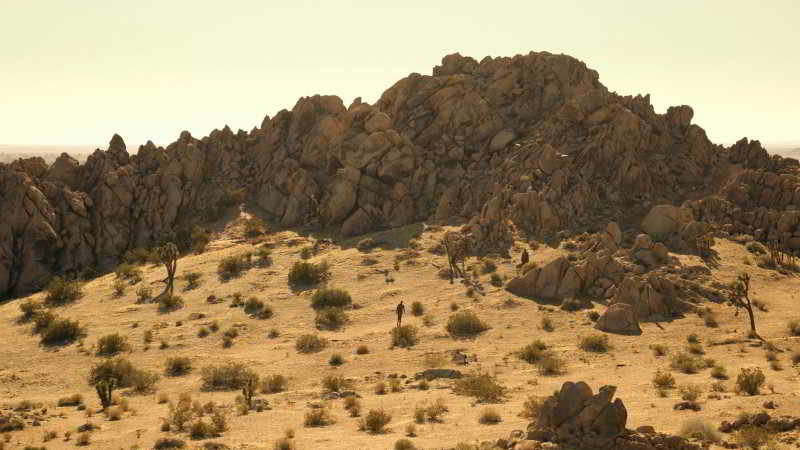
In Fallout Season 2’s first episode, “The Innovator,” characters traverse a harsh, rocky expanse en route to Las Vegas, mirroring the Mojave’s unforgiving badlands. The sequence showcases dramatic boulder fields, twisted trees, and sun-blasted expanses where tension builds amid potential ambushes and environmental hazards. Resembling Joshua Tree’s signature geology, this stretch heightens the post-nuclear peril, with vault dwellers and wastelanders navigating cracked earth under a relentless sky. Dust storms and distant ruins frame high-stakes dialogue and action beats, emphasizing isolation and survival. The visuals nod to game lore, evoking New Vegas approach paths filled with mutated threats and scavenged tech.
The Real Filming Location
Joshua Tree National Park spans Riverside County, California, covering 790,636 acres across high and low deserts with elevations from 500 to 5,800 feet. Its coordinates near the query’s 33.899276, -115.896197 align with the park’s eastern Pinto Basin, known for massive rock piles like Skull Rock and Jumbo Rocks. Formed by tectonic shifts and erosion, the area features Joshua trees (Yucca brevifolia), cholla cacti, and granite monoliths. While not directly credited in production notes, the site’s distinctive formations match Season 2 footage described as “rocky areas of Joshua Tree National Park.” Season 2 relocated to California deserts, including nearby Death Valley, after tax incentives, prioritizing authentic Mojave visuals over Season 1’s New York sets.
Why This Location Was Chosen
Production selected Joshua Tree-like terrain for its visual fidelity to the Fallout games’ Mojave Desert, providing cost-effective, real-world apocalypse aesthetics without full CGI builds. The rocky, arid expanses naturally convey radiation-scarred isolation, ideal for vehicle chases and foot treks in the Las Vegas approach scenes. California’s tax credits totaling $152 million facilitated the shift from New York, enabling access to diverse deserts like Joshua Tree and Death Valley for $153 million in expenditures. Director Jonathan Nolan favors evocative real locations, as seen in prior Namibia shoots; here, the park’s formations amplified dramatic lighting and scale, blending seamlessly with VFX for mutated creatures and distant ruins. This choice rooted the series in its California game origins.
Visiting the Location
Joshua Tree National Park welcomes over 3 million visitors yearly via entrances at West Entrance (Joshua Tree) and North Entrance (Twentynine Palms). The Pinto Basin area, near coordinates 33.899276, -115.896197, is accessible via Park Boulevard, with trails like Bajada to Keys View offering rock formation views. Entry costs $30 per vehicle (valid 7 days); open 24/7, but gates close at night. Best visited October-May to avoid summer heat exceeding 100°F; bring water, as no services exist inside. Camping at Jumbo Rocks or Black Rock (reservations via recreation.gov) provides stargazing under dark skies. Respect no-trace principles—no drones or off-trail hiking. Nearby Interstate 10 and CA-62 ease access from Palm Springs (45 miles).
Frames:
Location Address:
 Riverside County, California, United States