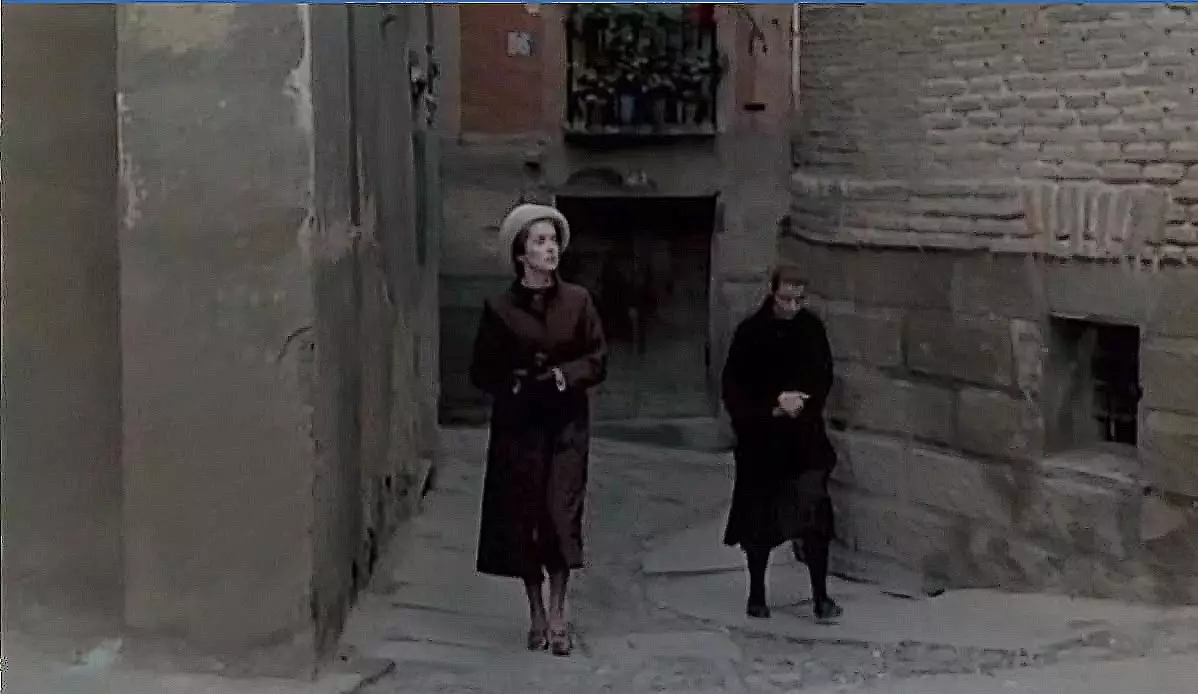
The Sepulcher Scene at Tavera
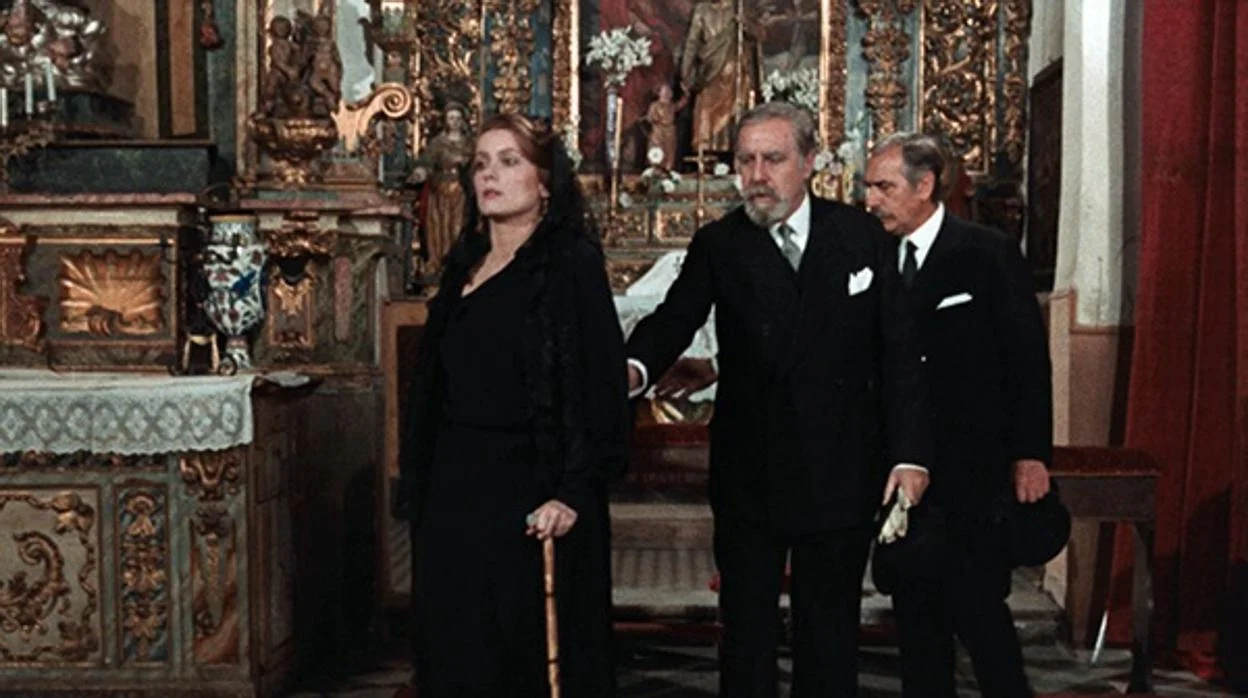
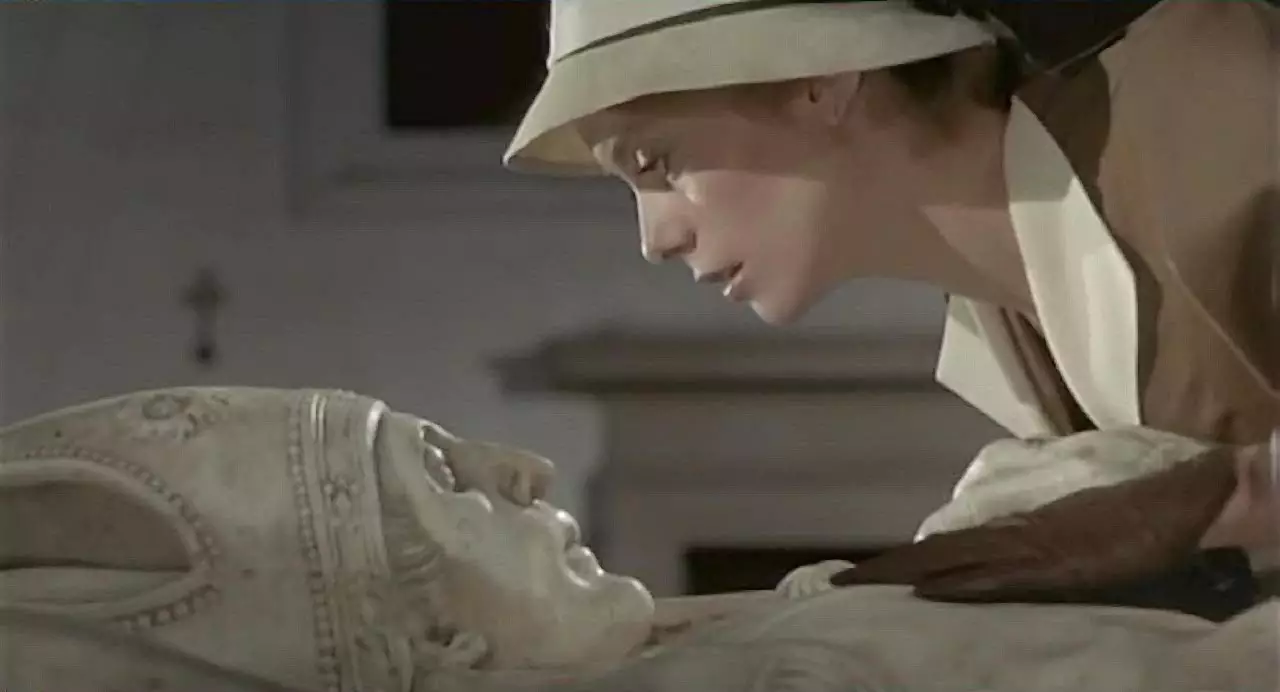
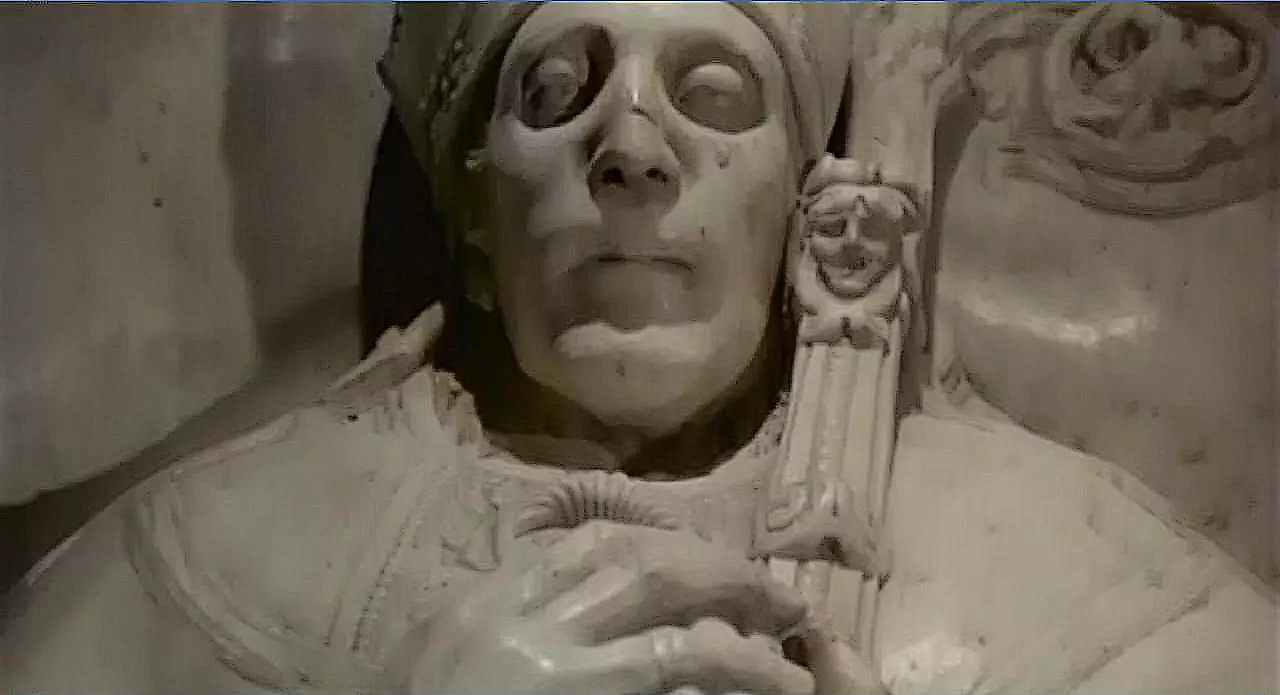
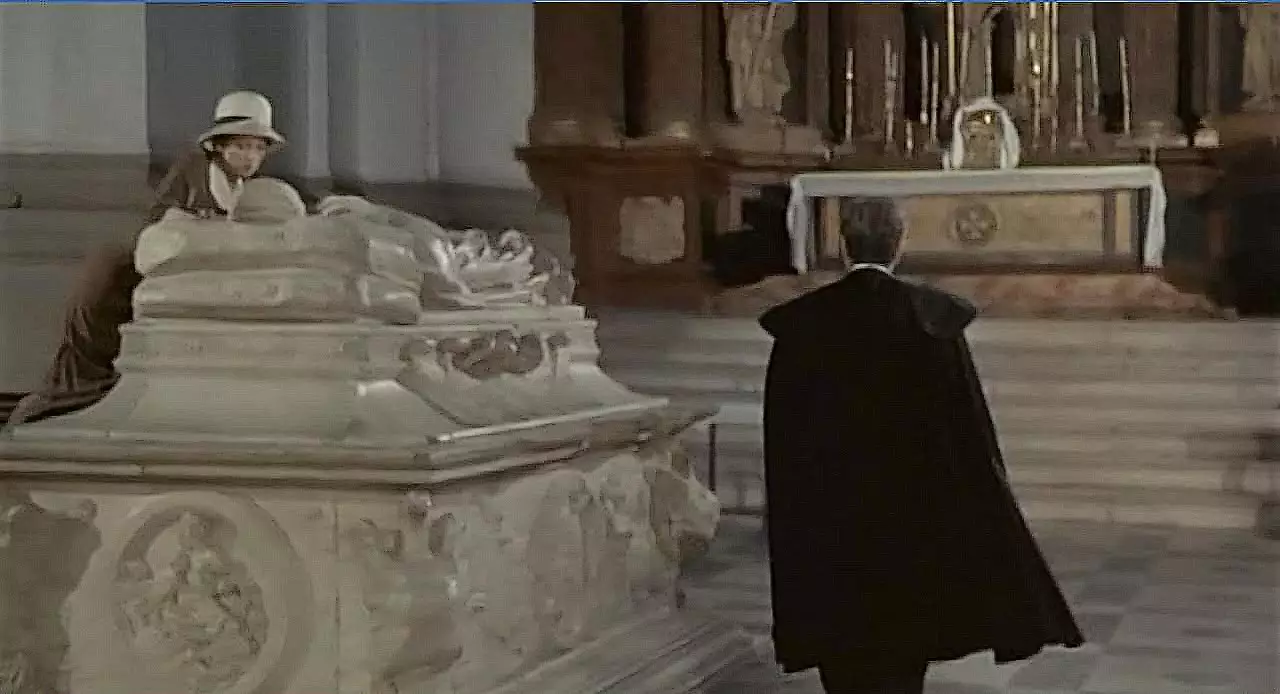
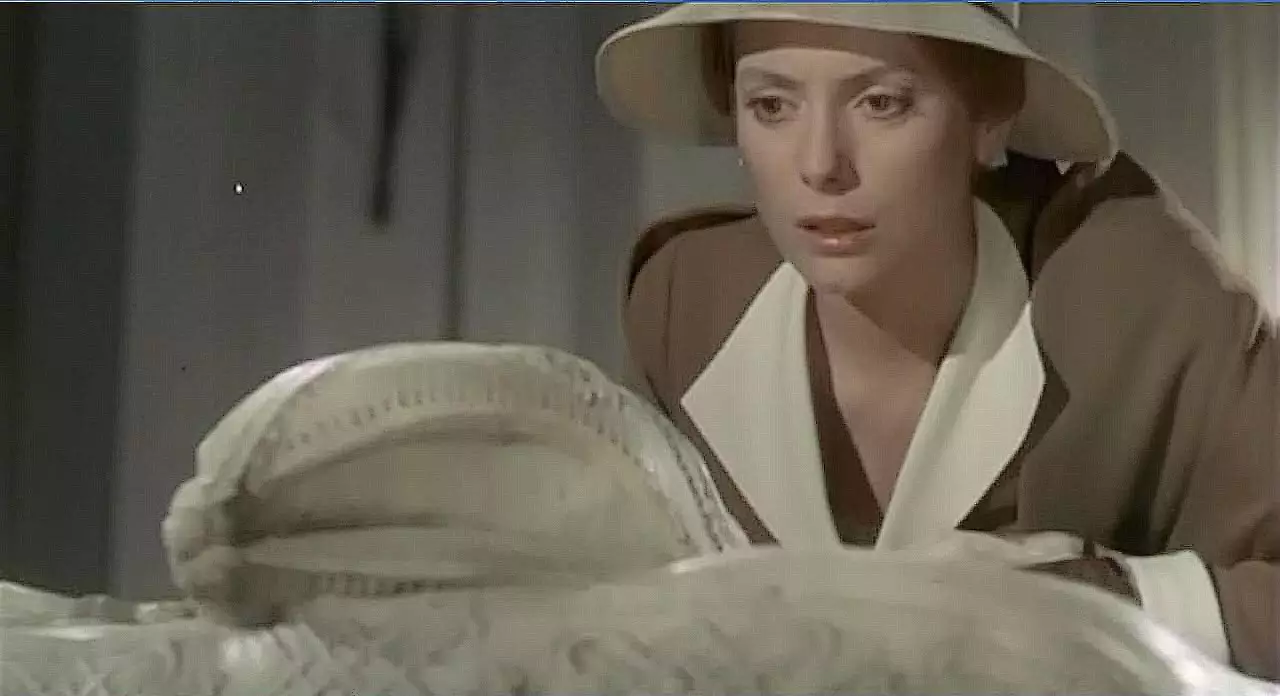
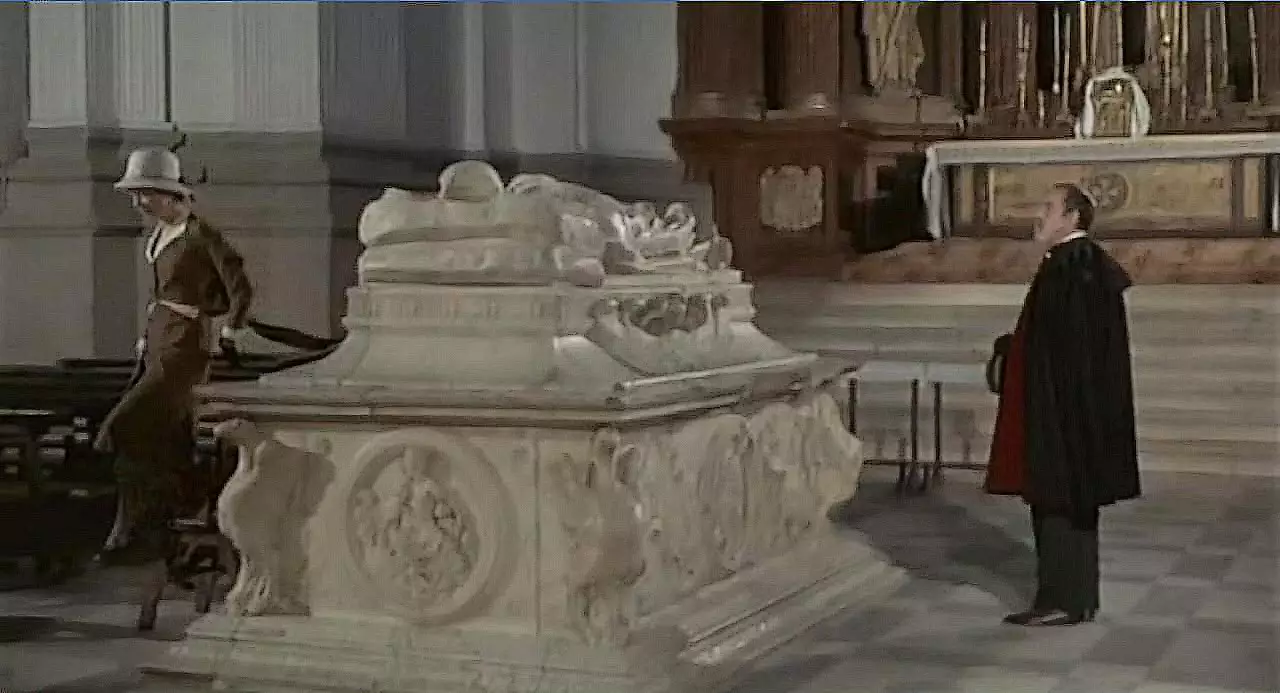
Considered one of the most intense images in Spanish cinema, the scene shows Tristana standing face to face with the Cardinal Tavera’s sepulcher inside the Hospital de Tavera. Deneuve’s gaze contrasts the vitality of life with the alabaster stillness of death. According to screenwriter Jean-Claude Carrière, this moment represents “the victory of death over life,” although others interpret it as the opposite—the triumph of life’s force over social rigidity. (User-provided text + analysis from The Buñuel Alternative to Tristana).
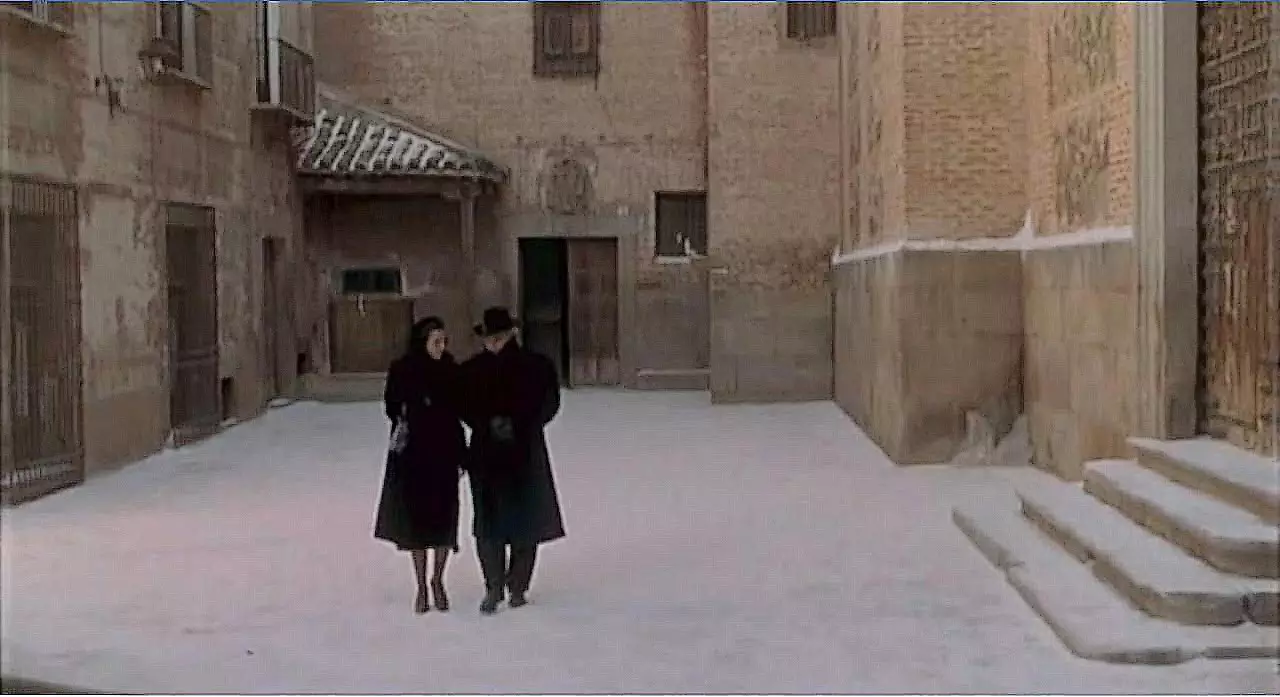
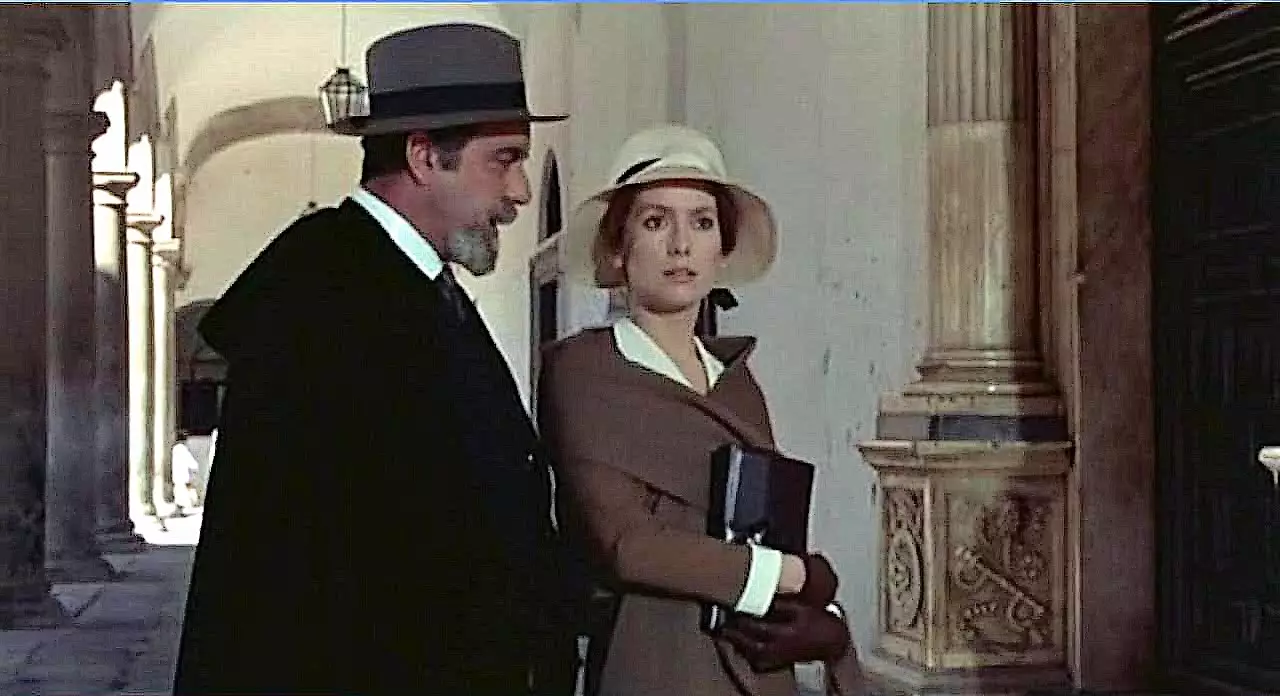
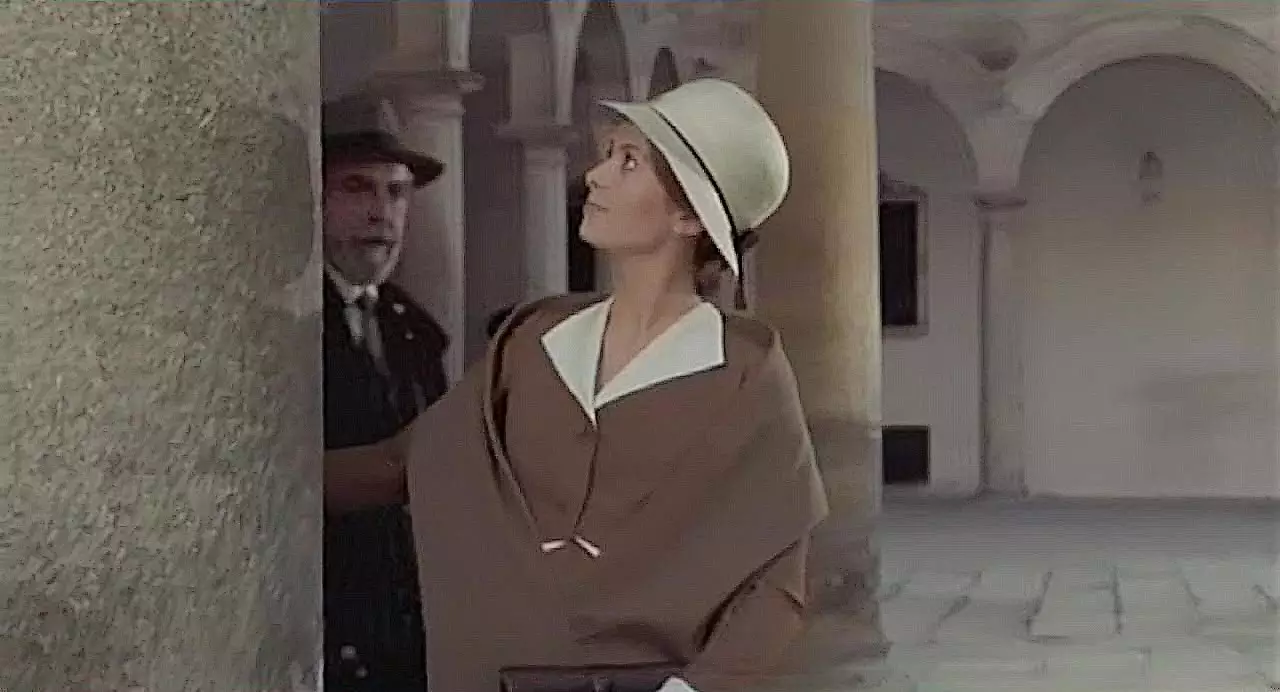
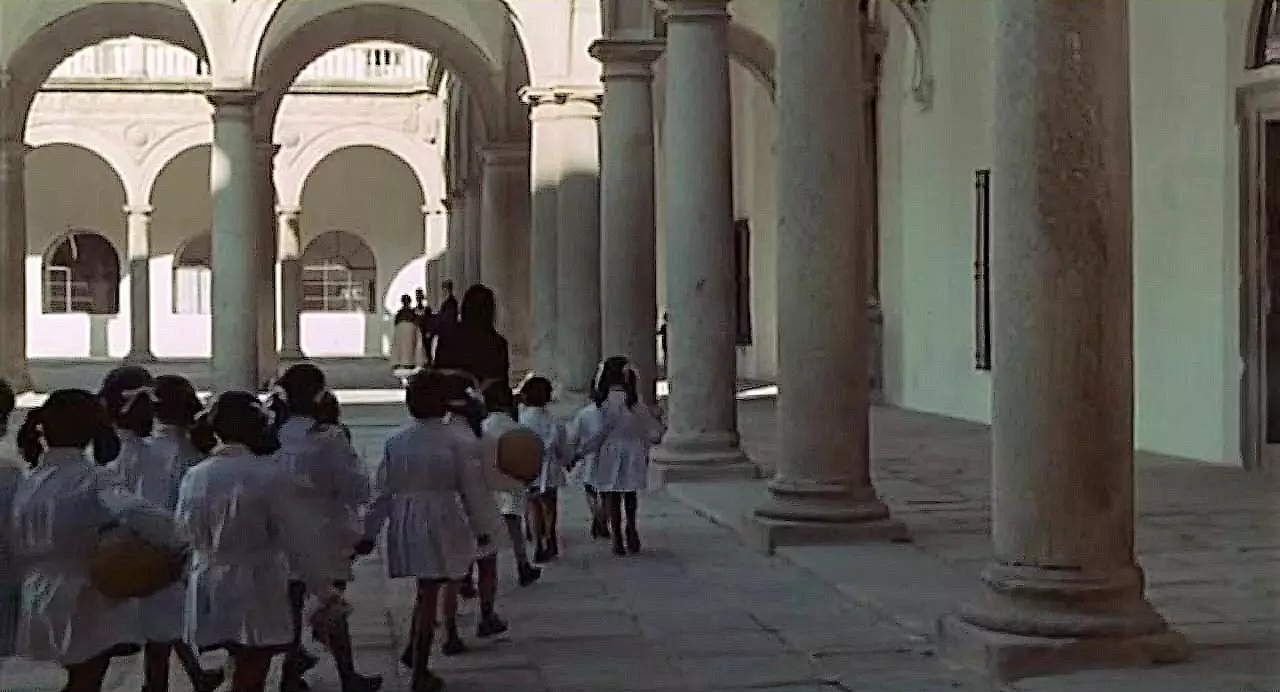
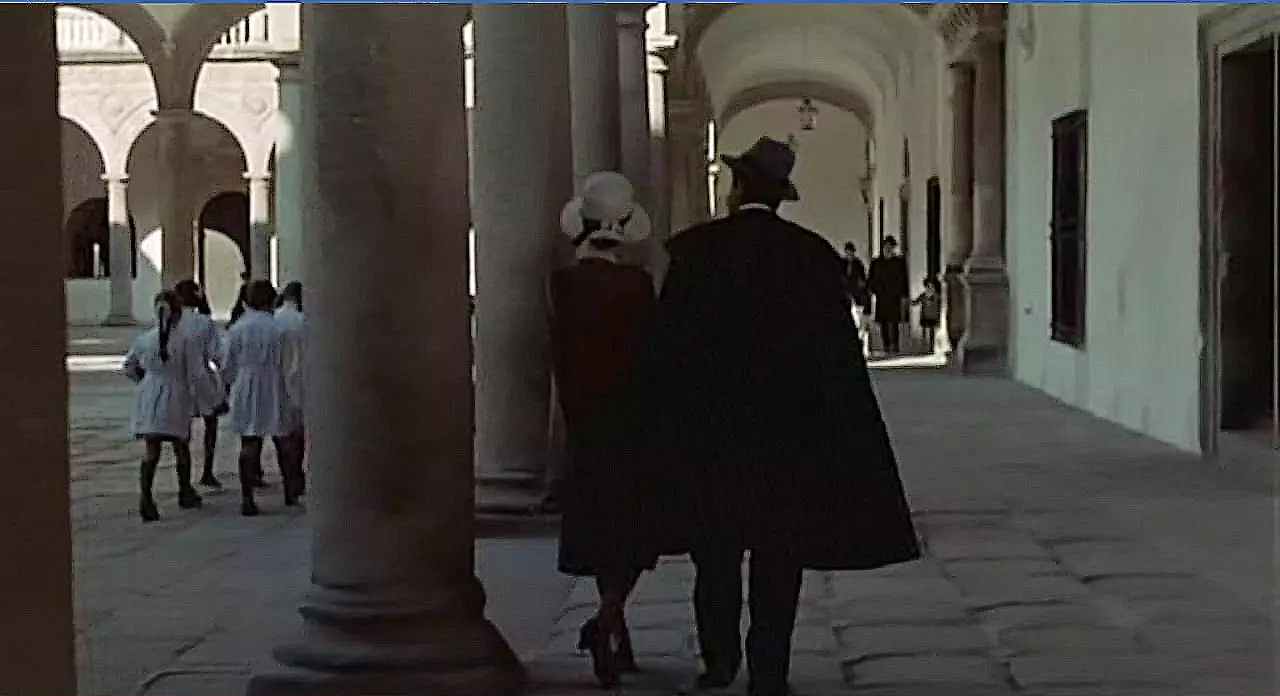
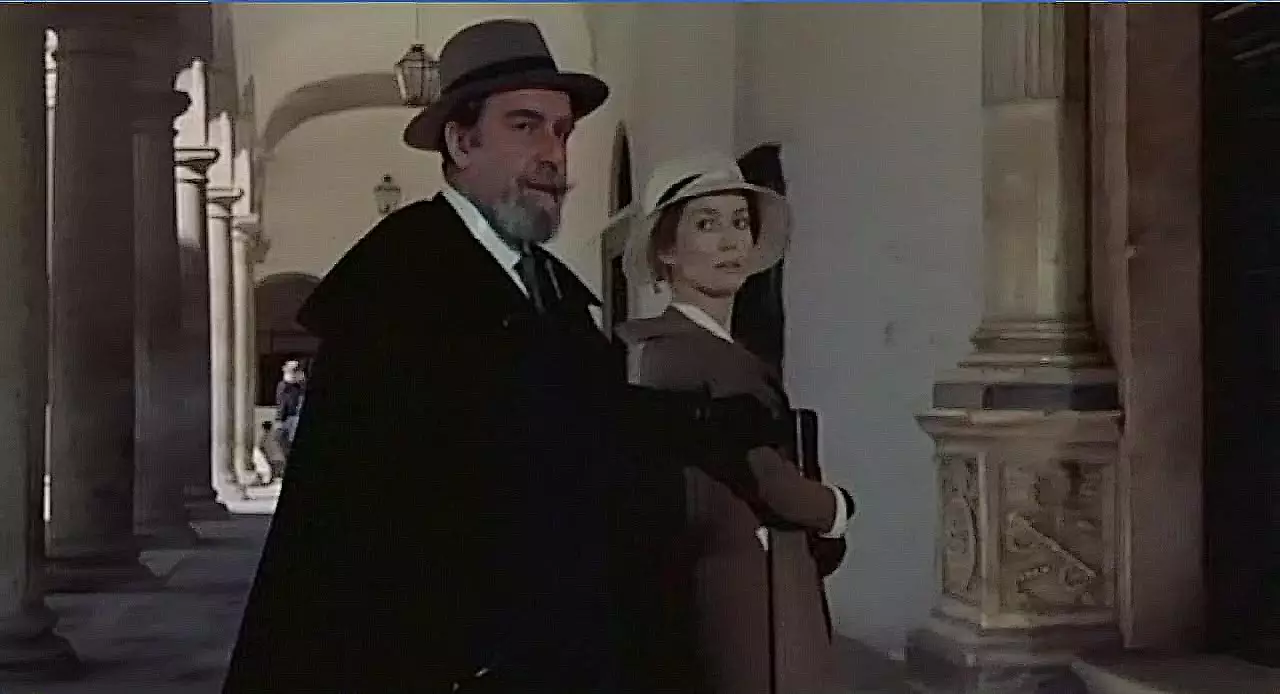
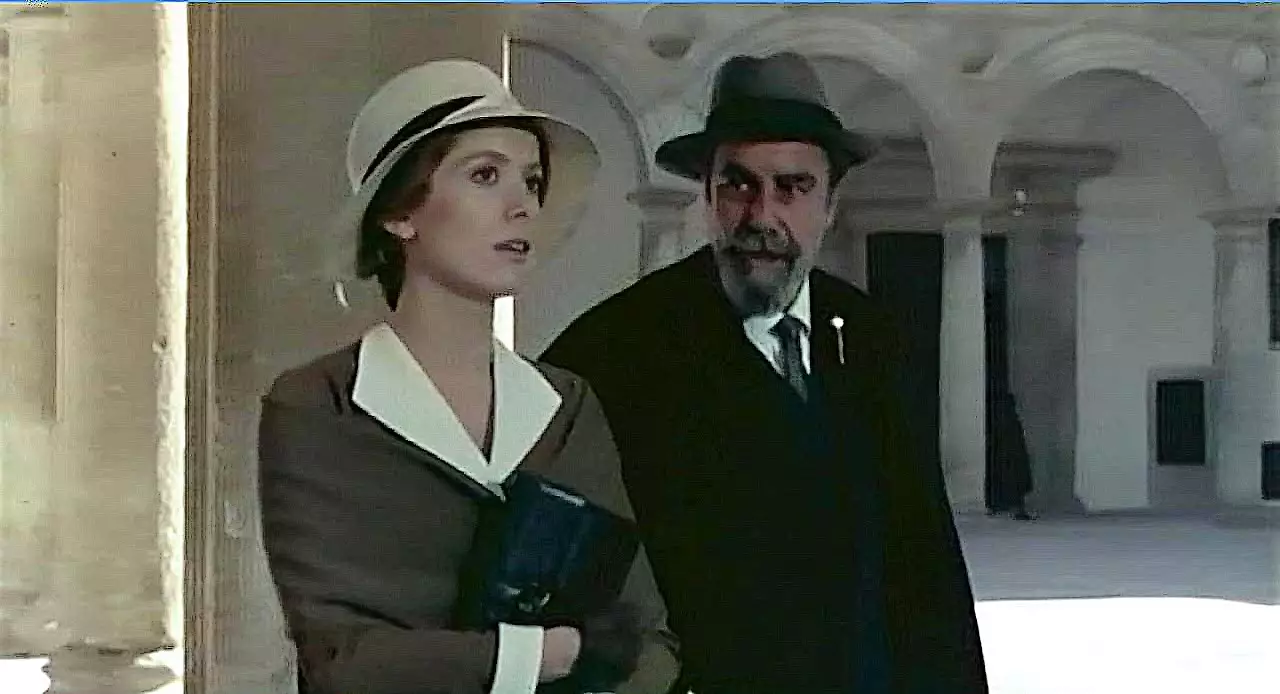
Local sources add that in addition to this iconic moment, other scenes were filmed in the courtyard of the Hospital de Tavera, including one where Tristana tells Don Lope “no two columns are alike” as she chooses her favorite.
Toledo as a Cinematic Character
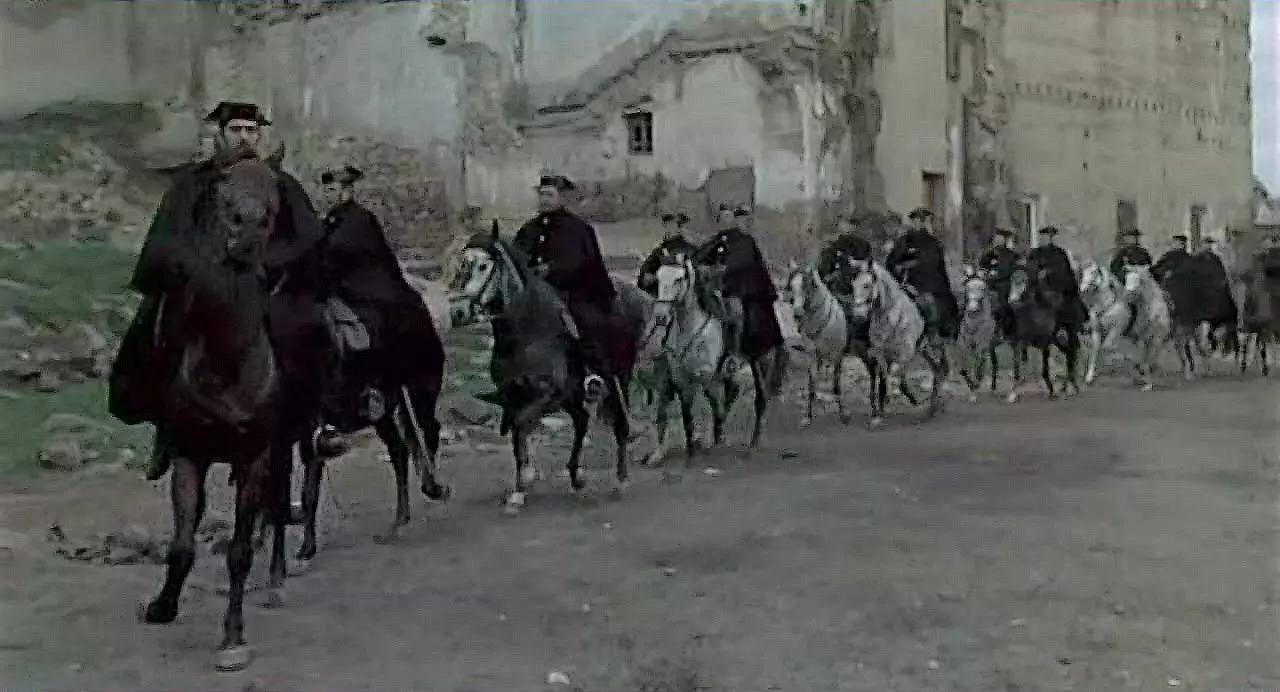
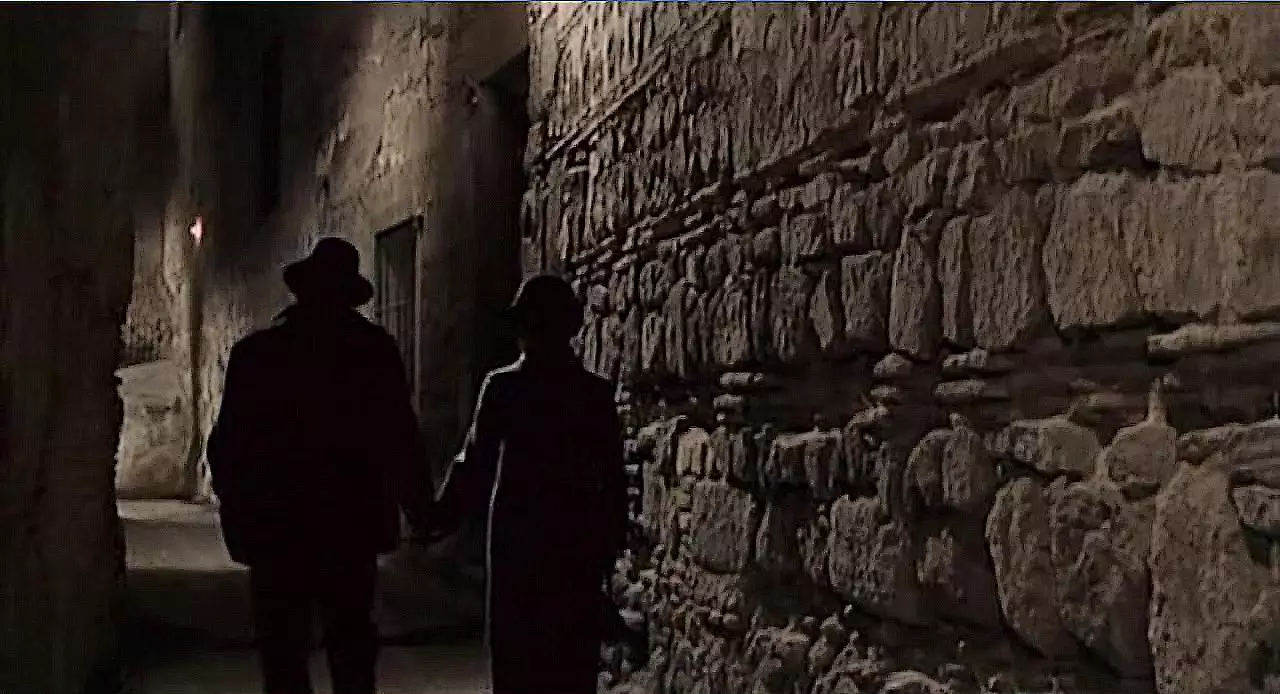
Buñuel began shooting in the cold November of 1969 at the Hospital de Tavera. Additional sequences were filmed at Plaza de Zocodover, the Convent of San Pedro Mártir, and other central locations such as the Paseo del Tránsito, Santo Tomé, and the historic streets surrounding Zocodover.
The Hospital de Tavera and its Artistic Legacy
The Hospital de San Juan Bautista, also known as Hospital de Tavera, is a Renaissance building constructed between 1541 and 1603, housing the sepulcher of Cardinal Tavera, a masterpiece by Alonso Berruguete. The church also contains valuable artworks and historical archives. (Sources: Wikipedia Spanish and English). This location has not only appeared in Tristana, but also in Buñuel’s Viridiana (1961) and other productions such as La conjura de El Escorial and The Three Musketeers (1973).
Toledo Traveling: A Cinematic Route
Today, the Castilla-La Mancha regional government and Lorens Tours offer “Toledo Traveling”, a cinematic sightseeing route that visits key filming locations across the city, including iconic scenes from Tristana and Viridiana. Day tours often end at Tavera, while night tours immerse visitors in the Buñuelian atmosphere.
The scene of Tristana facing the sepulcher of Cardinal Tavera symbolizes the tension between the living and the dead, captured in Renaissance marble and framed by Buñuel’s surrealist eye. The Hospital de Tavera serves not merely as a backdrop but as another character—memory, art, and cinema intertwined within its walls. Today, Toledo keeps that legacy alive through guided tours that celebrate its cinematic heritage.
Frames:
Location Address:
 Hospital Tavera. C. Duque de Lerma, 2, 45003 Toledo. Spain.