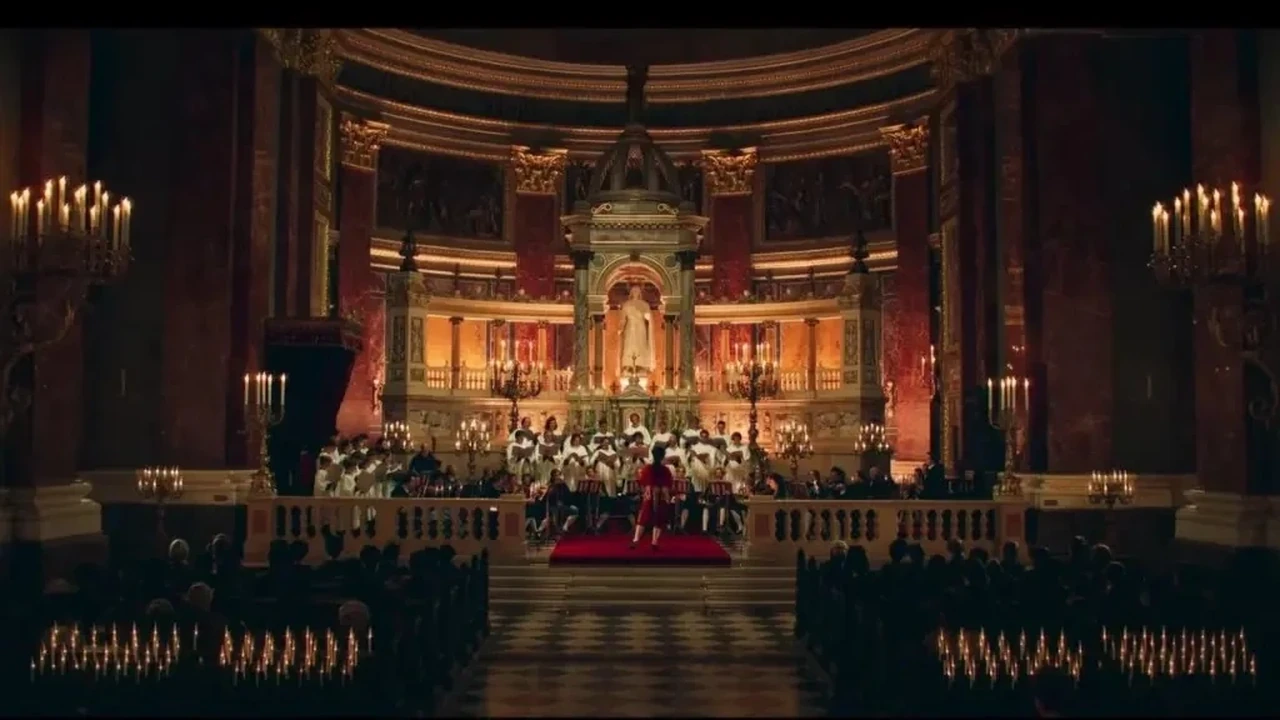
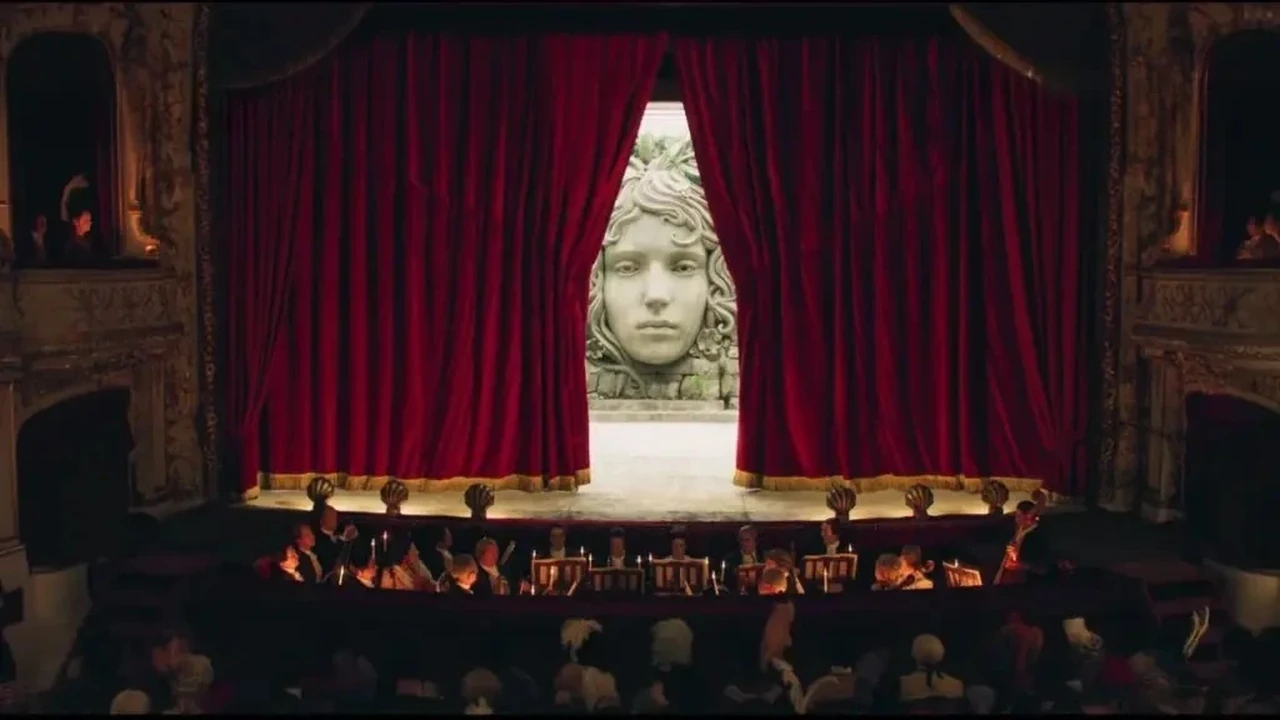
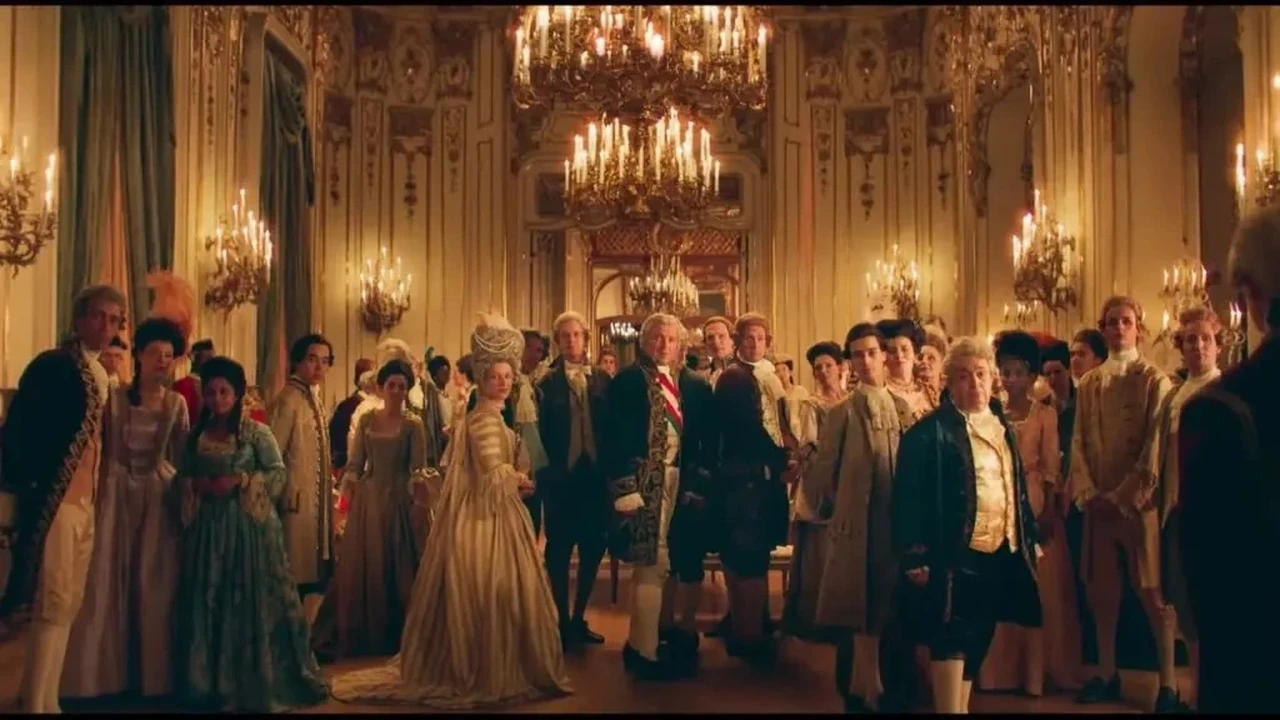
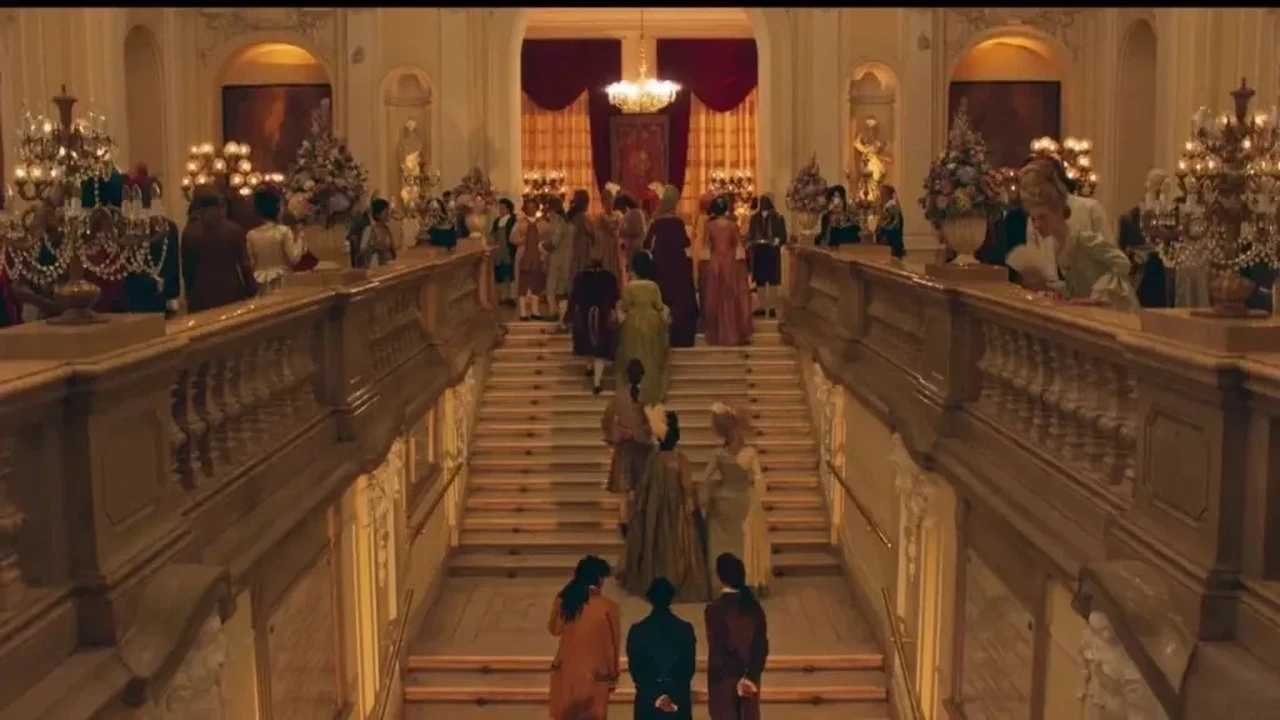
Scene in the film
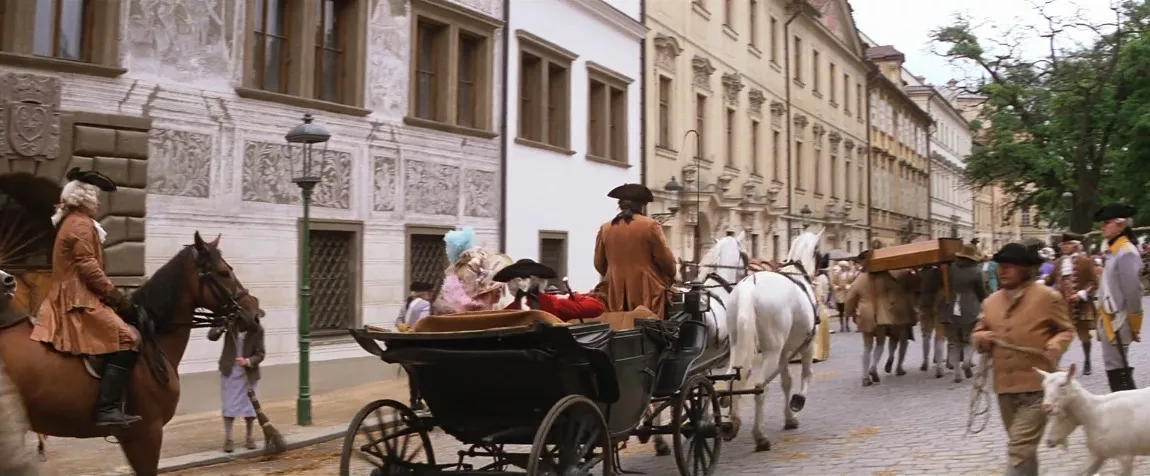
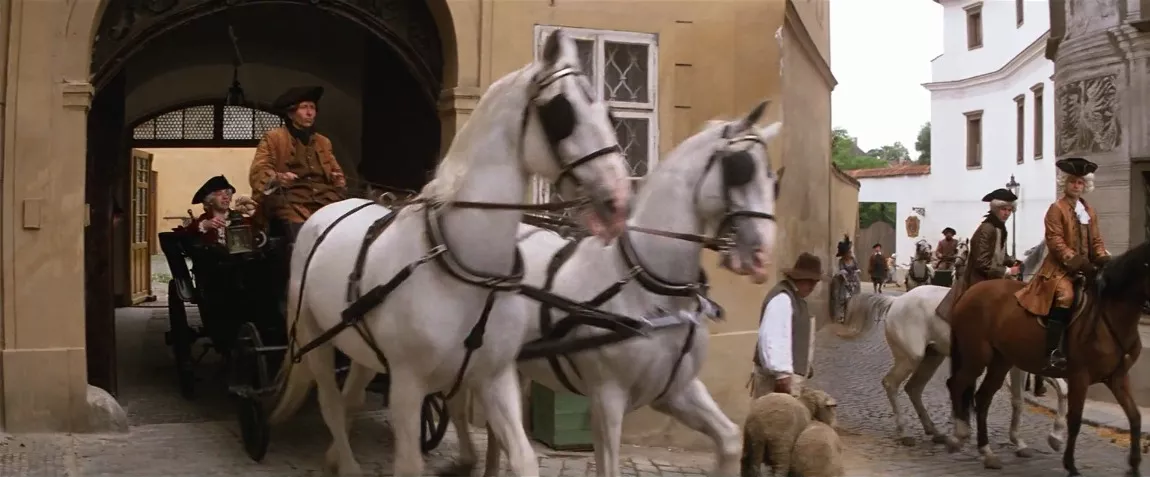
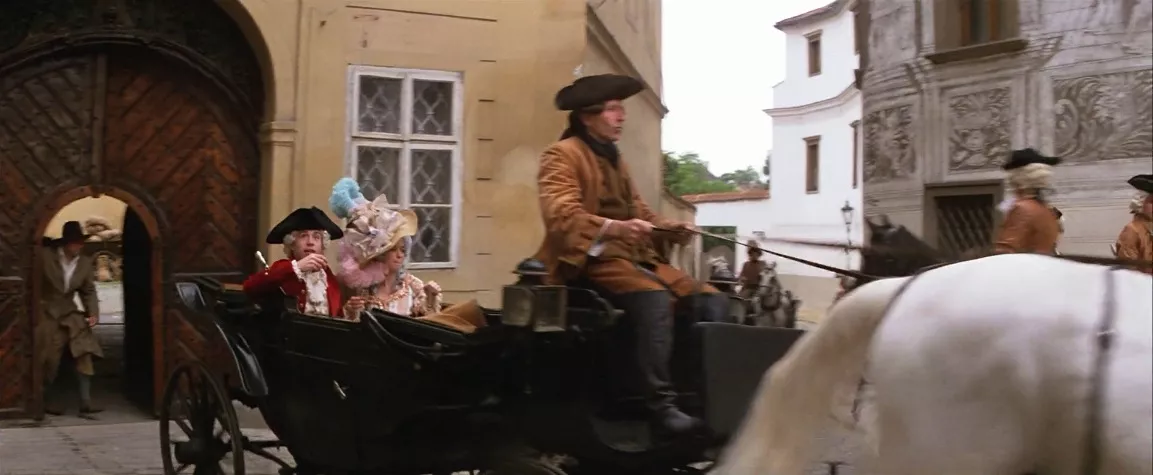
In Amadeus (1984), directed by Miloš Forman, Mozart’s house is portrayed as one of the personal spaces that reflect both his creative brilliance and his precarious social position. These scenes show Mozart in a domestic setting, away from courtly splendor, where his playful personality, financial instability, and intense dedication to music coexist. The interiors emphasize the contrast between Mozart’s genius and the modest reality of his daily life, reinforcing the film’s central theme: extraordinary talent existing within very human limitations.
The house serves as a narrative counterpoint to the imperial palaces and grand halls shown elsewhere in the film. While court scenes are rigid and ceremonial, Mozart’s home feels more intimate and unguarded, allowing the audience to witness his informal behavior, spontaneous musical moments, and strained relationships. This domestic environment deepens the psychological portrait of Mozart as seen through Salieri’s conflicted perspective.
The real location
The building used as Mozart’s house is located at Hradčanské náměstí, in the historic Hradčany district of Prague, just steps away from Prague Castle. This area has long been associated with nobility, clergy, and royal administration, making it one of the most architecturally significant parts of the city. The surrounding square is lined with Baroque and Renaissance buildings, many of which have remained largely intact for centuries.
Although Mozart himself never lived in this specific building, the structure’s period-appropriate façade, proportions, and urban setting make it an authentic representation of an 18th-century Central European residence. Prague’s exceptional preservation of historic architecture allows locations like this to convincingly stand in for Vienna of Mozart’s era, without modern intrusions disrupting the visual illusion.
Why this location was chosen
Prague was chosen extensively for Amadeus due to its architectural continuity with the late 18th century. Unlike Vienna, which underwent heavy modernization, Prague retained many districts that still resemble the Habsburg-era cityscape. The building at Hradčanské náměstí offered an exterior that required minimal alteration, allowing the production to focus on performance and atmosphere rather than digital or physical reconstruction.
From a production standpoint, the location also benefited from logistical advantages. The proximity to other key filming sites, experienced local crews, and supportive film authorities made Prague an efficient and flexible filming base. Visually, the building’s understated elegance reinforced the narrative intent: portraying Mozart not as a pampered court composer, but as a brilliant artist navigating the fragile balance between recognition and obscurity.
Visiting the location
Today, Hradčanské náměstí is fully accessible to the public and is one of Prague’s most visited historic areas. The building used in Amadeus can be viewed from the exterior, though it is not operated as a museum dedicated to the film or to Mozart. Visitors can freely explore the square, admire the architecture, and photograph the location as part of a broader walk through Prague Castle and its surroundings.
For film enthusiasts, this stop works best as part of a self-guided Amadeus filming locations tour around Prague. Early morning or late afternoon visits are recommended to avoid crowds and to experience the square in softer light, closer to the atmosphere captured in the film.
Frames:
Location Address:
 Hradčanské náměstí 68/7, 118 00 Praha 1. Czech Republic