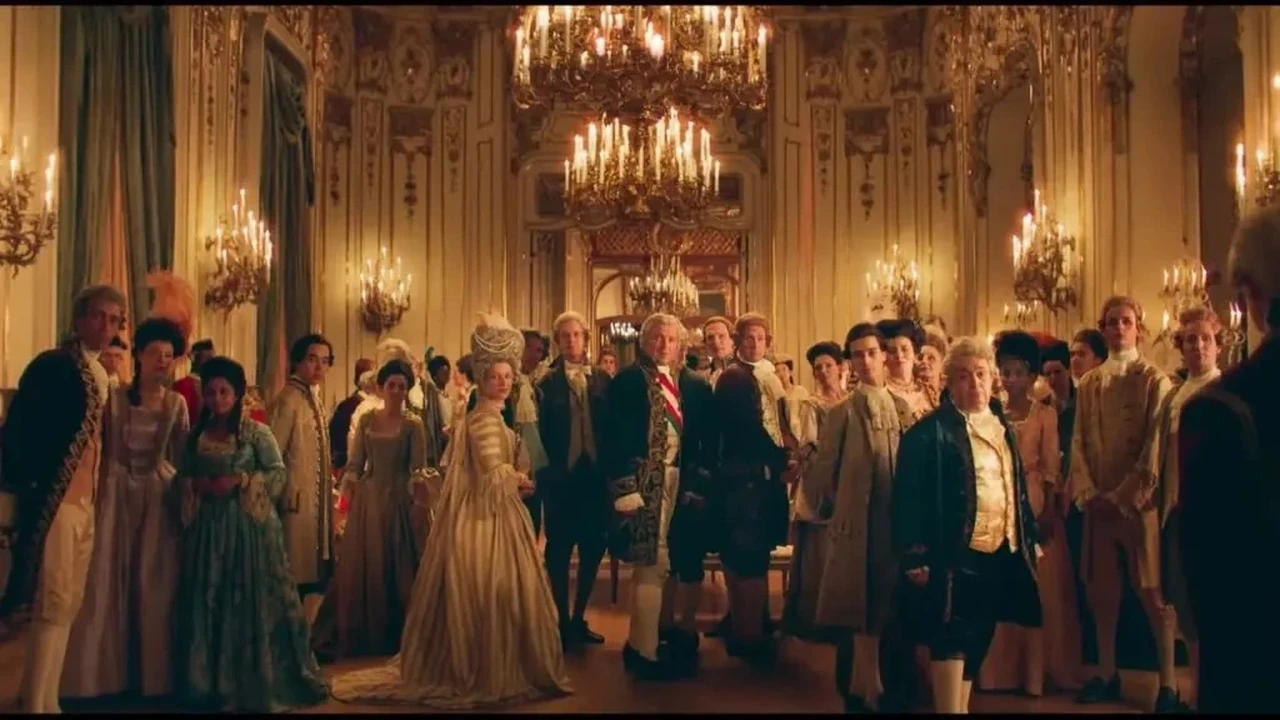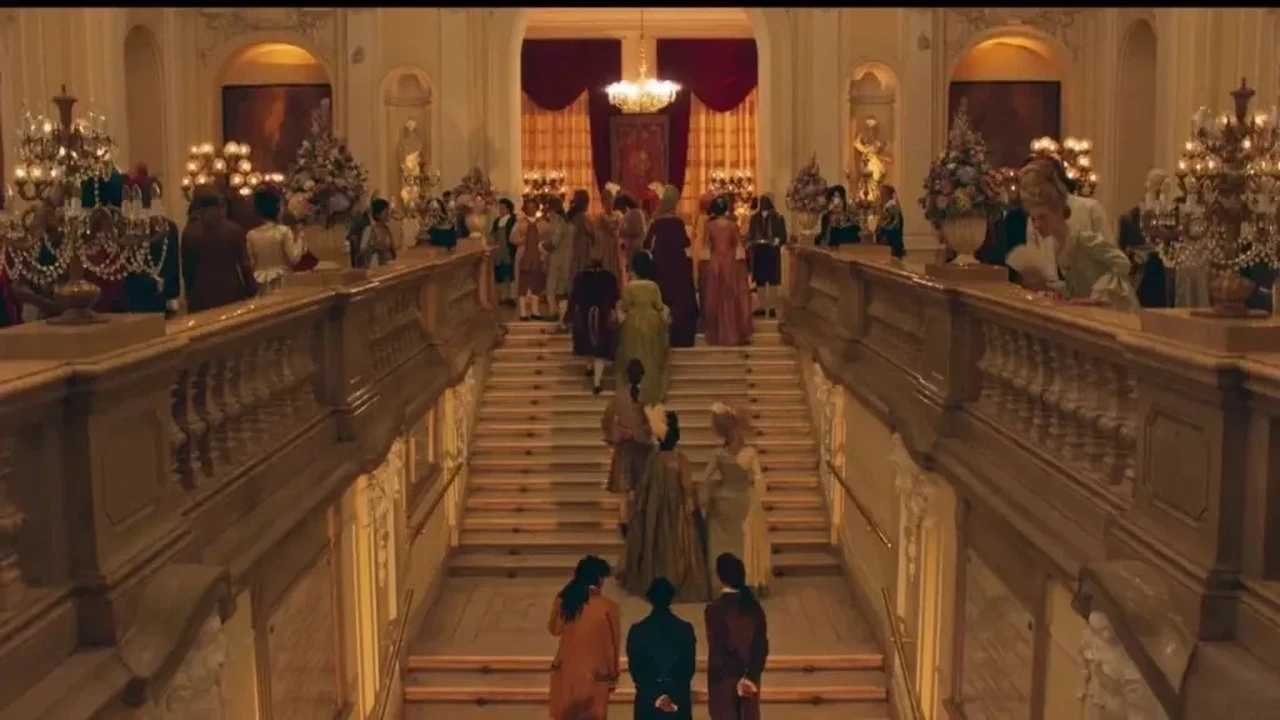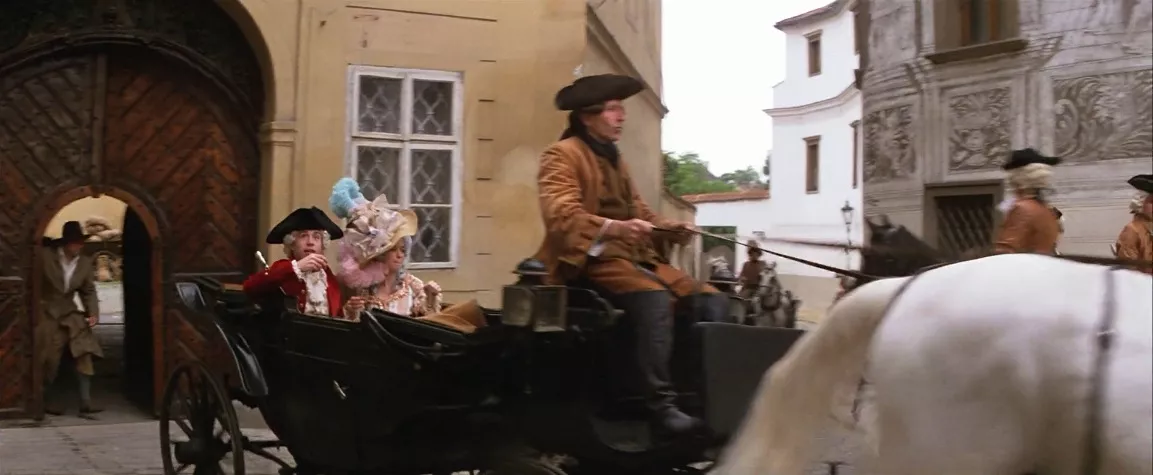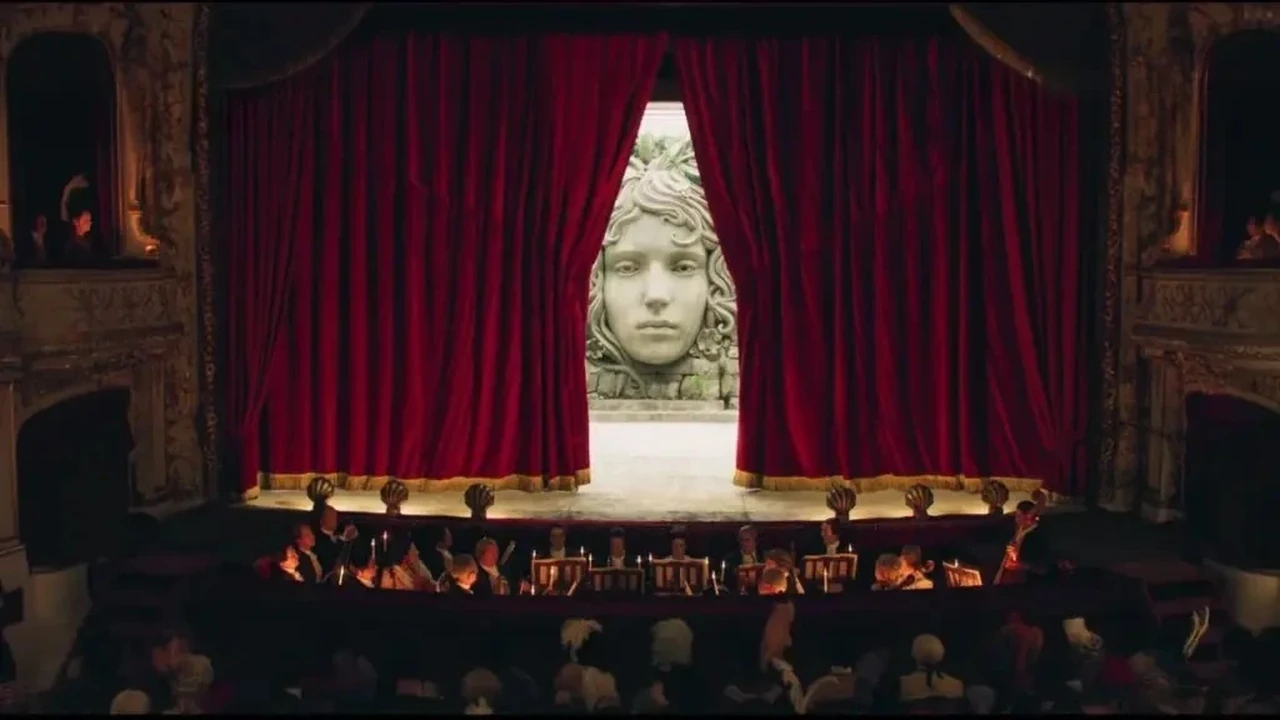
Scene in the film
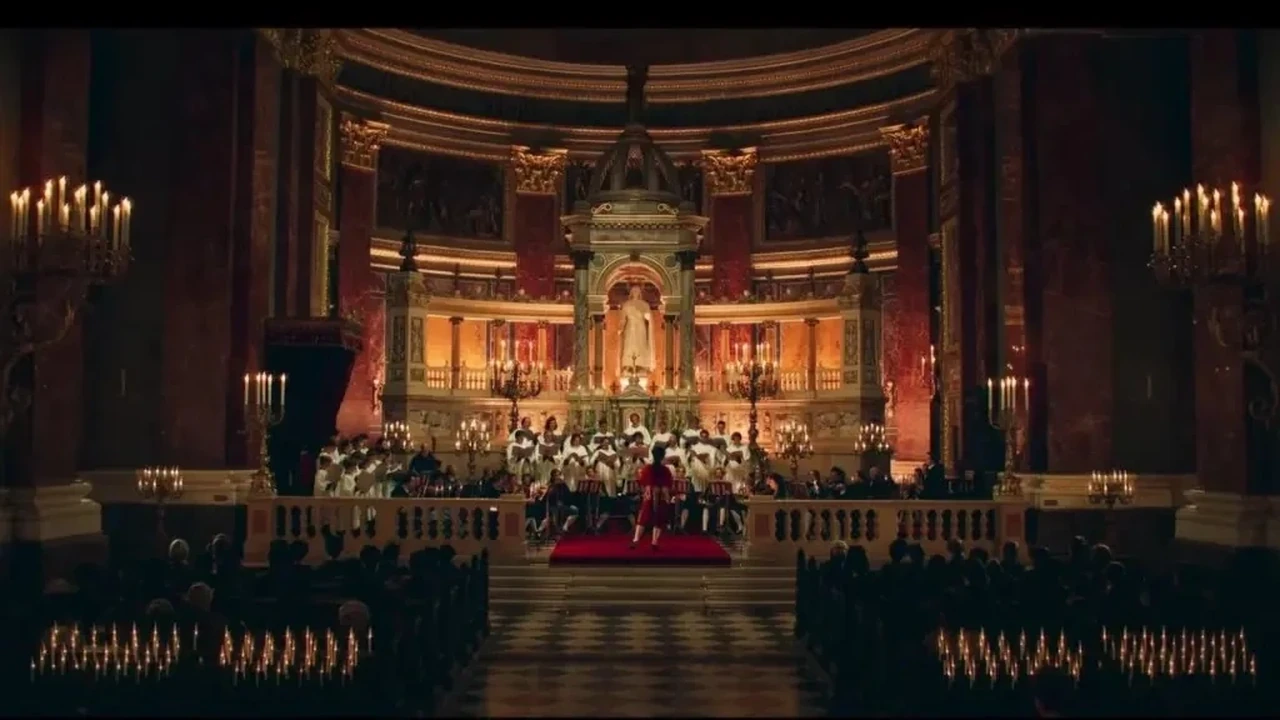
In Amadeus (1984), directed by Miloš Forman, St. Stephen’s Basilica was used to film scenes that required a monumental ecclesiastical interior capable of conveying religious authority, public ceremony, and social gravity. These sequences are associated with important church moments in the story, where music, faith, and institutional power intersect. The scale of the interior reinforces the public dimension of religion in 18th-century society, far removed from private devotion.
Within the narrative, such church settings function as spaces of collective judgment and formality. They contrast sharply with Mozart’s more intimate creative environments, underlining the tension between individual genius and the rigid structures of church and state. The vastness of the basilica amplifies the ceremonial atmosphere, making individuals appear small within the grand machinery of tradition and hierarchy.
The real location
St. Stephen’s Basilica is one of Budapest’s most iconic landmarks and the largest church in the Hungarian capital. Located in the heart of the city, the basilica was completed in the early 20th century after decades of construction, blending Neo-Renaissance architecture with monumental proportions. Its vast dome dominates the skyline, while the interior is richly decorated with marble, mosaics, gilded details, and large-scale religious artworks.
Named after Saint Stephen, the first King of Hungary, the basilica holds deep national and religious significance. Beyond its function as a place of worship, it serves as a cultural venue for concerts and public events, particularly organ and classical music performances. Its acoustics and spatial grandeur make it especially well suited to films dealing with music, ceremony, and institutional power.
Why this location was chosen
For Amadeus, the production required church interiors that felt imposing, authentic, and visually commanding. St. Stephen’s Basilica offered a sense of scale that few locations could match, allowing the filmmakers to stage scenes involving public rituals and formal gatherings without relying on studio sets. Its architectural richness provided immediate historical credibility, even though the building itself postdates Mozart’s lifetime.
From a cinematic perspective, the basilica’s symmetry, height, and controlled light create strong visual compositions, ideal for wide shots emphasizing ceremony and authority. Budapest’s openness to international film productions also played a key role, giving the crew access to monumental spaces that would have been far more restricted or impractical elsewhere.
Visiting the location
St. Stephen’s Basilica is open to visitors year-round and is one of Budapest’s most popular attractions. Visitors can explore the main nave, side chapels, and dome, with optional access to the panoramic terrace at the top. As an active place of worship, certain areas or times may be reserved for religious services, so respectful behavior and appropriate attire are required.
For film location enthusiasts, the basilica is easy to visit and photograph, especially outside service hours. Early mornings or weekdays offer a quieter experience, allowing visitors to better appreciate the atmosphere captured in Amadeus without heavy crowds.
Frames:
Location Address:
 Szent István tér 1, 1051 Budapest. Hungary